

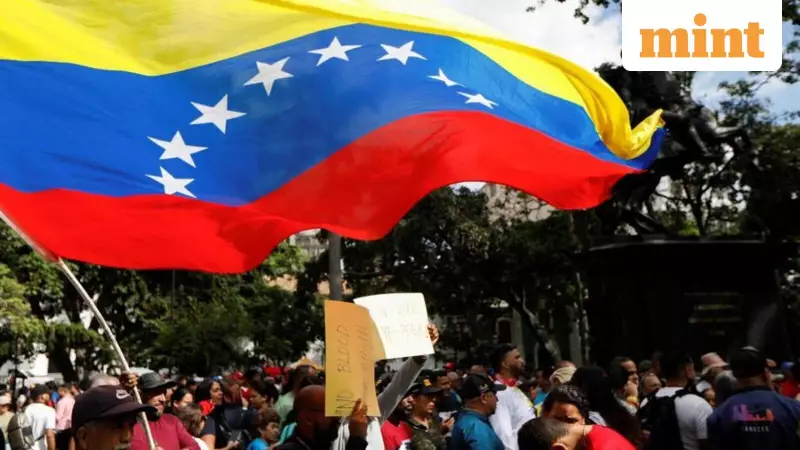
In a powerful reflection on the state of the hemisphere, renowned historian and essayist Enrique Krauze presents a compelling narrative of Latin America's arduous yet resilient journey towards democratic consolidation as we enter 2026. The region, he argues, is experiencing a significant new birth of democracy, a phenomenon rooted in a deep historical struggle against authoritarianism, populism, and external interference.
The Republican Dream and Its Historical Betrayals
Krauze reminds us that the vision of a free, democratic Latin America is not a utopian fantasy but a foundational ideal. Following independence from Spain and Portugal, the continent's own founding fathers—figures like Simón Bolívar, Andrés Bello, and Juan Bautista Alberdi—drew direct inspiration from the American Revolution. Their early constitutions enshrined core republican principles: separation of powers, the rule of law, civil liberties, a free press, and regular elections.
However, this promising start was soon undermined by three persistent, baleful forces. The first was a craving for personal power, manifesting in caudillos and outright dictators like Argentina's Juan Manuel de Rosas and Mexico's Porfirio Díaz. The 20th century then saw the consolidation of militarism, exemplified by Juan Perón's fascist-tinged regime.

The second factor was endemic social and political violence—a landscape marred by coups, revolts, and revolutions. The ideological turning point came with Fidel Castro's Cuban Revolution in 1959, which installed the continent's first unapologetic communist dictatorship and inspired a wave of anti-democratic guerrilla movements.
The Weight of Imperialism and the Resilience of Liberalism
Krauze identifies a third, external factor that deepened the region's political wounds: US imperialism. From the annexation of vast Mexican territories in the 1840s to the orchestrated overthrow of Chile's democratically elected President Salvador Allende in 1973, American policy has a long record of betraying the region's liberal traditions. US diplomacy, often guided by commercial interest and a racist 'America First' mindset, frequently chose to support dictators for perceived stability, infamously summed up in the attitude of "He may be a son of a bitch, but he's our son of a bitch."
Despite this hostile history, liberal values and a free press persisted courageously. Intellectual giants like Octavio Paz and Mario Vargas Llosa became towering exponents of free expression, while newspapers operated for over a century as monuments to liberty.
The 1980s Miracle, the Populist Mirage, and 2026's Turning Tide
Starting in the 1980s, and accelerating after the fall of the Berlin Wall, a democratic miracle seemed to unfold. Militaries retreated to their barracks, dictators were tried, and countries from Argentina to Nicaragua embraced peaceful transitions. Yet, this dawn proved a mirage as megalomania and social conflict fused in the rise of populist leaders.
The prime example is Venezuela, where oil wealth empowered the caudillo Hugo Chávez and his successor, Nicolás Maduro, leading to what Krauze calls "the greatest economic implosion in Latin American history." A similar populist wave swept Ecuador, Bolivia, Peru, Colombia, and Mexico.
As of 2026, Krauze observes a decisive turn. Citizens in Peru, Ecuador, and Bolivia are waking up to their rulers' lies. The suffering inflicted by the Cuban and Venezuelan models has irreversibly discredited them. The rule of law prevails in countries with a committed democratic left, such as Chile, Uruguay, and Brazil.

Venezuela: The Epicenter of Liberation
The key to freedom's reconquest, Krauze asserts, lies in Venezuela restoring democracy with its legitimate president, Edmundo González. This would vindicate opposition leader María Corina Machado and trigger a domino effect. The criminal autocracy of Maduro, sustained by drug trafficking, faces unprecedented internal and external pressure. Venezuelan society, richer in courage than oil, remains determined to rebuild, promising the return of millions of exiles and family reunifications.
This liberation would not only inspire change in Nicaragua and Cuba but also check remaining populist governments in Colombia, Mexico, and El Salvador from further eroding democratic institutions.
The US Challenge and a Shared Hemispheric Ideal
The path forward is complicated by historical grievances and current US policy. Krauze notes that President Donald Trump's bullying approach—including threats regarding the Panama Canal—adds to these tensions. Furthermore, Trump's own disdain for democracy, evidenced by his attempts to undermine Brazilian institutions in support of coup-plotter Jair Bolsonaro, presents a fresh challenge.
Paradoxically, the Maduro regime's narcotics ties have prompted the Trump administration to apply greater pressure, which could aid Venezuela's peaceful transition. The goal must be a new political and economic order for the hemisphere.
Krauze concludes that while Americans under Trump may struggle to celebrate their 250th independence anniversary in unity next year, the return of democracy in Latin America could reinvigorate the shared ideals of the founding fathers across the Americas, offering a beacon of hope rooted in a 200-year struggle for freedom.





