

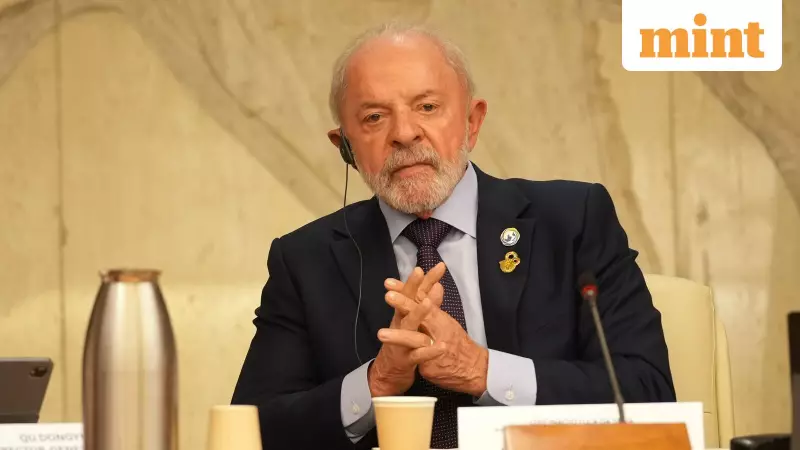
Brazil is gearing up for a pivotal general election in October 2026, and the political landscape is once again dominated by the figure of Luiz Inácio Lula da Silva. The 80-year-old leftist president, who returned to power in January 2023, has emerged as the clear favourite to win a historic fourth term, a comeback that seemed improbable just a year ago.
From Political Peril to Polling Lead
In early 2025, President Lula's political future looked bleak. His approval ratings were crumbling under the weight of past corruption scandals from his first two terms (2003-2010) and new graft accusations, including a scandal at Brazil's pensions institute. Having just undergone brain surgery, the veteran leader and his Workers' Party (PT) were in a state of panic. The situation changed dramatically due to a series of external shocks and missteps by his opponents.
The turning point came with former US President Donald Trump's decision to impose tariffs on Brazilian imports and sanction Brazilian judge Alexandre de Moraes, who oversaw the case against Jair Bolsonaro. This move was seen as a major affront to Brazilian sovereignty and proved deeply unpopular. Furthermore, in November 2025, former President Jair Bolsonaro began serving a 27-year prison sentence for attempting a coup after losing the 2022 election.

With its populist figurehead jailed and widely criticised for cozying up to Trump, the Brazilian right descended into disarray. Lula seized the moment, even adopting a blue cap with the slogan "Brazil belongs to Brazilians." His approval ratings surged, and he is now the frontrunner for the October 2026 vote, which will also elect all 513 federal deputies, 54 of 81 senators, and all 27 state governors.
Economic Tightrope and a Gift from Washington
Upon his return to office, Lula promised to tackle unfinished business: ending hunger, expanding electricity access, and cutting taxes for the poor. His initial focus on boosting Brazil's global profile, however, alarmed markets. In 2024, the Brazilian real was the world's worst-performing major currency.
His finance team later pivoted, attempting to balance market confidence with popular support. They tightened spending on welfare programmes like Bolsa Familia, and central bank chief Gabriel Galípolo (appointed by Lula in January 2025) maintained high interest rates. Simultaneously, the government expanded subsidies for electricity and mortgages and distributed free cooking gas. In November 2025, Senate reforms meant 16 million Brazilians would pay less or no income tax.
Lula's economic management received an unexpected boost from the US. The fall in the US dollar's value since Trump took office in January 2025 caused the real to appreciate, slashing food inflation and pleasing Lula's base. Interestingly, after a phone call in December 2025, Trump called his chat with Lula "great" and said "I like him." Subsequently, Trump lifted the sanctions on Judge Moraes and removed many tariffs on Brazilian goods.
A Fragmented Opposition Grasps at Security
With Bolsonaro in prison and Trump warming to Lula, Brazil's right wing has struggled to find a coherent message. It has latched onto crime and security—now rated as the most important problem by Brazilians—as a primary issue. However, as security is largely a state responsibility, it is difficult to pin blame directly on the federal president.
The right's problems were compounded in early December 2025 when Bolsonaro anointed his son, Flávio Bolsonaro, as his political successor. The move was met with a dismal response. Most centre-right parties in Congress refused to back him, financial markets slumped on fears of a Lula landslide, and even Bolsonaro's own voter base reportedly prefers his wife, Michelle. Evangelical pastor Silas Malafaia criticised the "amateurism" of the right.
Political analysts suggest that while Flávio Bolsonaro could still reach a run-off due to a fragmented field, he would likely lose decisively to Lula. The right's hope may lie with Tarcísio de Freitas, the moderate governor of São Paulo and Bolsonaro's former infrastructure minister. However, Freitas is likely to run only with Bolsonaro's blessing, which currently rests with his son.

As things stand, Lula is positioned to join the exclusive club of presidents like Franklin D. Roosevelt with a fourth term. The election will be a stark contrast to the US vote in November 2026, where President Trump faces low approval ratings and the potential loss of congressional control. For now, despite widespread voter fatigue with both Lula and the Bolsonaros, the Brazilian left is laughing as the right flounders.





