

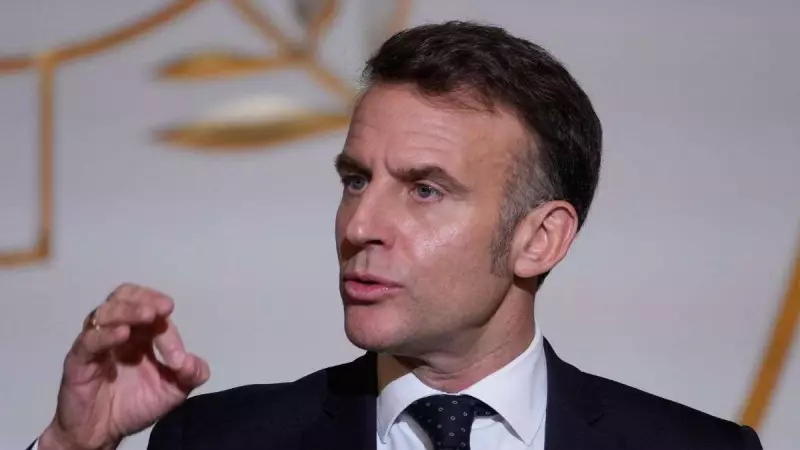
In a striking critique of American foreign policy under former President Donald Trump, French President Emmanuel Macron has voiced serious concerns about the United States' shifting global posture. Macron accused the US of turning its back on long-standing allies, a move he suggests undermines the Western alliance and global stability.
Macron's Direct Criticism of Trump's Approach
French President Emmanuel Macron did not mince words when addressing the foreign policy direction championed by Donald Trump. He highlighted a pattern of behaviour where the United States, under Trump's "America First" doctrine, appeared to be retreating from its traditional role as a guarantor of international security and cooperation. Macron's comments, made on January 8, 2026, reflect ongoing European anxiety about the reliability of the US partnership, especially with the potential of Trump returning to power.
The core of Macron's argument centres on the perceived abandonment of mutual defence and diplomatic commitments. He pointed to instances where the Trump administration questioned the value of alliances like NATO, engaged in trade disputes with European partners, and made unilateral decisions that often caught allies off guard. This approach, Macron suggested, forces European nations to reconsider their own strategic autonomy and defence capabilities.

Implications for the Western Alliance and Global Order
The public admonishment from a key European leader like Macron carries significant weight. It signals a deepening rift within the transatlantic partnership, which has been the cornerstone of Western security for decades. Macron's statement is not merely a critique of one politician but a warning about a fundamental shift in how the United States views its role in the world.
The potential consequences are far-reaching. A United States perceived as an unreliable ally could lead to:
- Increased European defence spending and efforts towards strategic independence, as championed by Macron himself.
- A power vacuum in various global hotspots that adversaries might seek to exploit.
- Fragmentation of the unified Western response to challenges from nations like Russia and China.
Macron's critique underscores a European dilemma: how to maintain a vital alliance with Washington while preparing for a future where American support may not be as steadfast. His comments are a call for Europe to unite and build its own capacity to act, a theme he has promoted throughout his presidency.
A View from India and the Global South
While the dispute is centred on transatlantic relations, its ripple effects are felt worldwide, including in India. New Delhi carefully watches the dynamics between Western powers, as stability in those relationships impacts global trade, security, and multilateral institutions. A divided or inward-looking West can alter the geopolitical calculus for rising powers.
For India, which values strategic autonomy while maintaining strong ties with both the US and European nations, the public friction between Paris and Washington is a diplomatic tightrope. It highlights the complexity of navigating a world where traditional alliances are under stress. The situation reinforces the importance for India of diversifying partnerships and investing in its own comprehensive national power.
In conclusion, Emmanuel Macron's stark warning is more than political commentary; it is a diagnosis of a changing world order. The allegation that the US is turning away from its allies under a Trumpian foreign policy framework marks a critical moment for international diplomacy. Whether this leads to a permanent estrangement or a recalibration of the alliance remains to be seen, but the call for Europe to stand on its own feet has never been louder from the Élysée Palace.






