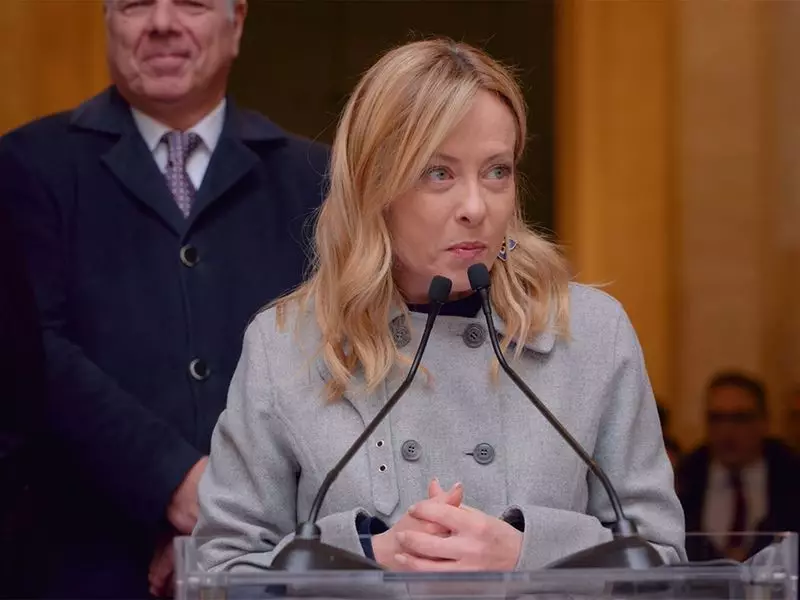
Italian Prime Minister Giorgia Meloni has issued a stark warning to her senior government staff, indicating that the upcoming year 2026 is poised to present even greater challenges than 2025. The caution came during a closed-door meeting with her top aides and cabinet members, setting a tone of preparedness for a period of significant political and diplomatic tests.
A Stern Forecast for the Coming Years
According to sources familiar with the discussions, Meloni described the year 2025 as "complicated" but framed 2026 as a period that will be "much worse." This forward-looking assessment is not based on domestic economic forecasts alone but is deeply tied to Italy's role on the global stage. The Prime Minister's warning underscores the high-stakes environment her government expects to navigate in the near future.
The core of her concern revolves around two major international events where Italy will play a central role. The first is the European Parliament elections scheduled for June 2026. These elections are seen as a critical barometer for the political direction of the European Union and a key test for Meloni's conservative Brothers of Italy party and its allies within the European conservative bloc.

Italy's Dual Challenge: EU Elections and G7 Leadership
Simultaneously, Italy is slated to hold the presidency of the Group of Seven (G7) industrialized nations in 2026. This role will place Rome at the epicenter of global diplomacy, requiring it to manage complex agendas on issues ranging from geopolitical conflicts and economic security to climate change and artificial intelligence governance. Hosting and leading the G7 summit is a massive logistical and political undertaking that demands immense resources and strategic focus from the entire government apparatus.
Meloni's message to her team was clear: the convergence of these two high-pressure events will stretch the government's capabilities. She emphasized the need for unwavering discipline, cohesion, and a relentless work ethic within her administration to successfully steer through this turbulent period. The warning serves as both a rallying cry and a reality check for her political and bureaucratic staff.
Political Context and Implications
This internal briefing sheds light on the strategic thinking at the highest levels of the Italian government. Since taking office in October 2022, Meloni has sought to consolidate her position both domestically and as a significant player in European politics. Her comments suggest a recognition that the years 2025 and 2026 will be defining for her premiership and for Italy's influence within the EU and among Western allies.
The outcome of the European Parliament elections could significantly alter the balance of power in Brussels, affecting legislation and the appointment of top EU officials. A strong showing by Meloni's political family could amplify Italy's voice. Conversely, a poor performance could weaken her domestic and international standing. Coupled with the scrutiny that comes with the G7 presidency, the period represents a monumental challenge.
Analysts suggest that Meloni's warning is also aimed at managing expectations and preparing her coalition for a prolonged period of intense media and diplomatic scrutiny. By framing 2026 as particularly difficult, she is likely seeking to foster a siege mentality that promotes unity and diligence within her ranks, aiming to turn potential vulnerabilities into a demonstration of effective governance.
As Italy braces for this demanding phase, the world will be watching how Meloni's government handles the dual pressures of a continental electoral battle and the responsibilities of leading one of the world's most important diplomatic forums. Her stark message to her staff confirms that the road ahead is anything but smooth.