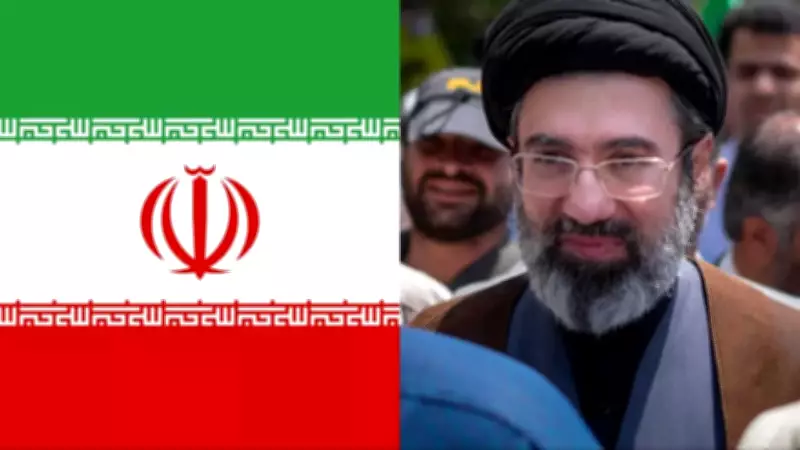
Mojtaba Khamenei's Appointment as Iran's Supreme Leader Captivates Global Attention
The sudden elevation of Mojtaba Khamenei to the position of Iran's supreme leader has ignited intense international scrutiny and profound questions regarding the future trajectory of the Islamic Republic. This pivotal transition follows the death of his father, Ayatollah Ali Khamenei, who governed Iran for over three decades, meticulously shaping its political landscape, military strategies, and ideological foundations.
From Shadowy Figure to Supreme Authority: A Dramatic Political Shift
For many years, Mojtaba Khamenei operated as a discreet yet immensely influential presence within Iran's intricate power structures. Despite his rare public appearances and minimal media engagement, he exerted substantial behind-the-scenes control. His ascension now places him at the apex of Iran's hierarchy, granting him command over the nation's armed forces, intelligence networks, judiciary, and critical aspects of both domestic governance and foreign policy.
This development marks a significant departure for the Islamic Republic, sparking vigorous debates about whether Iran's leadership is evolving into a dynastic system—a concept fundamentally opposed by the 1979 revolution that originally dismantled the monarchy.

Early Life and Religious Training of Mojtaba Khamenei
Born in 1969 in Mashhad, a prominent religious hub in northeastern Iran, Mojtaba Khamenei was raised within one of the nation's most powerful political families. Following the path of Iran's clerical elite, he pursued rigorous religious studies at the seminaries of Qom, the epicenter of Shia Islamic scholarship. There, he immersed himself in Islamic jurisprudence and theology, preparing for a role within the clerical establishment that underpins Iran's political framework.
Despite this extensive religious education, Mojtaba never gained widespread recognition as a public scholar or orator. Instead, he cultivated a reputation as a strategic operator and political tactician, working predominantly away from the public eye.
The Quiet Influence and Network Building of Mojtaba Khamenei
Although Mojtaba Khamenei held no formal government position for much of his career, analysts widely believe he wielded considerable influence from within the supreme leader's office. Often described as a "gatekeeper" to his father, he played a crucial role in regulating access to the supreme leader and determining which issues received attention.
This position enabled him to forge robust connections with Iran's political elite, including senior clerics, intelligence officials, and commanders of the Islamic Revolutionary Guard Corps (IRGC). The IRGC, a dominant institution controlling military assets and substantial economic sectors, significantly bolstered Mojtaba's standing within Iran's power dynamics.
Controversies and Allegations Surrounding the New Leader
Mojtaba Khamenei has been a contentious figure, especially among critics of the Iranian government. His name emerged prominently during the 2009 protests following the disputed presidential election, with opposition figures accusing him of orchestrating support for Mahmoud Ahmadinejad's reelection and coordinating the state's crackdown on demonstrations.
These protests, known internationally as the Iranian Green Movement, represented some of the largest since the revolution, drawing global condemnation. In 2019, the United States imposed sanctions on Mojtaba, alleging he advanced his father's interests and supported policies curtailing political freedoms in Iran. Supporters of the Iranian leadership dismiss these claims as politically motivated efforts to pressure Tehran.
Longstanding Speculation About Succession and Dynastic Concerns
For more than a decade, analysts and diplomats speculated about Mojtaba's potential succession, a topic fraught with controversy given Iran's constitutional design to prevent hereditary rule. The constitution mandates that the Assembly of Experts, a council of senior clerics, selects the supreme leader.

However, Mojtaba's proximity to power and his alliances within Iran's security apparatus led many observers to view him as a likely successor. Critics warned that such a transition would resemble a political dynasty, undermining the revolutionary ideals that overthrew the monarchy of Mohammad Reza Pahlavi.
The Supreme Leader's Expansive Role in Iran's Governance
The position now occupied by Mojtaba Khamenei is the most authoritative office in Iran, surpassing the powers of presidents or prime ministers in many nations. The supreme leader holds ultimate control over nearly all government branches, including:
- Command of the armed forces
- Oversight of the judiciary
- Appointment of key figures such as military commanders and state media heads
This role also entails decisive influence over Iran's foreign policy and nuclear strategy, meaning Mojtaba's decisions will resonate across the Middle East and global geopolitics.
Leadership Amid Crisis: Navigating Regional and Domestic Challenges
Mojtaba Khamenei's rise occurs during an exceptionally volatile period for Iran. The nation confronts multifaceted challenges, including:
- Economic sanctions straining the country's resources
- Domestic political tensions and periodic waves of protests
- Escalating regional conflicts and strained relations with Western powers
Recent years have seen protests reflecting public frustration over economic hardships and political restrictions. As the new supreme leader, Mojtaba must adeptly navigate these pressures while sustaining support from Iran's security institutions and religious leadership.
Divergent Expert Views on Iran's Future Under Mojtaba Khamenei
Experts remain divided on the implications of Mojtaba Khamenei's leadership. Some analysts posit that his close ties to the Revolutionary Guard could amplify the influence of security institutions in Iranian politics. Others suggest his extensive experience within leadership circles may foster continuity and stability during this tumultuous phase.
Critics, however, express concerns that his tenure might precipitate a more hardline approach both domestically and internationally. As Iran's third supreme leader since 1979, Mojtaba inherits a complex system grappling with unprecedented regional tensions and internal strife. His ability to unify or polarize will hinge on how he wields the immense authority now vested in him, shaping Iran's political trajectory for years to come.