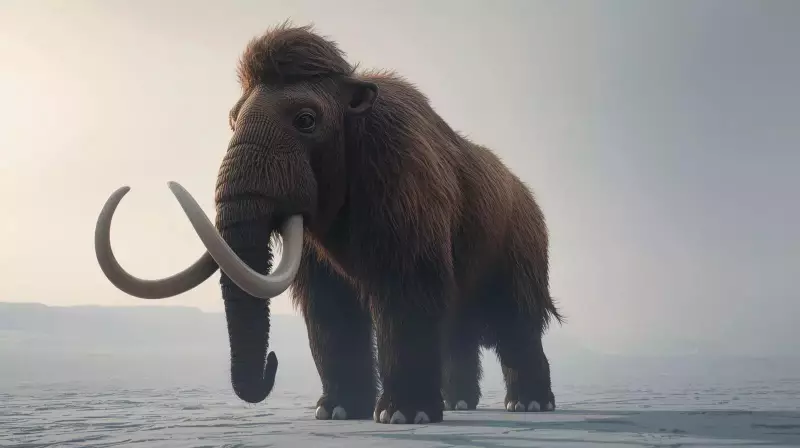
For over half a century, two unassuming bone fragments rested in a museum drawer in Alaska, confidently labelled as remains of the mighty Ice Age mammoth. Collected in the 1950s and catalogued, they were part of a familiar prehistoric narrative, their true story forgotten. The turning point came when the University of Alaska Museum of the North launched its public engagement initiative, the Adopt a Mammoth programme, inviting sponsors for fossil testing. This citizen science effort led researchers to re-examine these stored bones, beginning a meticulous scientific journey that would unravel a decades-old case of mistaken identity.
The Scientific Unravelling: From Radiocarbon Surprises to Isotopic Clues
The investigation's first major clue came from radiocarbon dating, and it was immediately puzzling. The tests indicated the bones were only between 1,800 and 2,700 years old. This timeline was shockingly recent for a mammoth, as these giants are widely believed to have gone extinct in the region around 13,000 years ago. Such a result would have forced a dramatic rewrite of mammoth extinction history. Instead of jumping to conclusions, the scientists paused, suspecting an alternative explanation.
They then employed stable isotope analysis, studying the levels of nitrogen and carbon preserved within the bone. These chemical signatures act as a permanent record of an animal's diet and environment. The results were definitive and surprising: the isotopic values pointed unmistakably towards a marine diet. Mammoths were land-based herbivores, but these bones belonged to creatures that fed from the ocean. This critical finding shifted the entire focus of the study from land to sea.

DNA Decodes the Mystery: A Whale's Tale from a Mammoth Drawer
The final, conclusive answer was provided by advanced DNA analysis, detailed in the study titled “Adopted ‘Mammoths’ from Alaska Turn Out to Be a Whale’s Tale”. The genetic evidence confirmed the fossils were not from a mammoth at all. One bone fragment belonged to a minke whale, while the other came from a North Pacific right whale—both ocean-dwelling species with vastly different behaviours from any Ice Age proboscidean.
This revelation also explained the confusing initial radiocarbon dates. Marine organisms absorb older carbon from the ocean, a phenomenon known as the marine reservoir effect, which can skew dating results if not accounted for. After applying the necessary corrections, the whales' ages were recalculated. One was found to be approximately 1,100 years old, and the other closer to 1,800 years old—ancient, but not from the prehistoric Ice Age.
The Enduring Puzzle: How Did Whale Bones Reach Inland Alaska?
With the species identified, a new geographical mystery emerged. The bones were reportedly found near Fairbanks, roughly 400 kilometres from the coast. How did whale remains end up so far inland? Researchers considered several theories. One possibility was that the whales swam far upriver systems like the Yukon, though this seems improbable for a right whale, which feeds on oceanic plankton.
Another plausible explanation involves human activity. Ancient indigenous peoples could have transported the bones inland for use as tools or raw materials. However, the simplest and perhaps most likely answer is a prosaic cataloguing or labelling error from decades ago, where bones originally collected from the coast were mistakenly associated with an inland site.
While this discovery did not rewrite the history of mammoths, it performed a quieter, equally vital service for science. It demonstrated how publicly funded research and careful re-examination can breathe new life into forgotten museum collections. The story underscores that progress in science is often slow, methodical, and sometimes wonderfully accidental, reminding us that our understanding of the past is always evolving, one bone at a time.