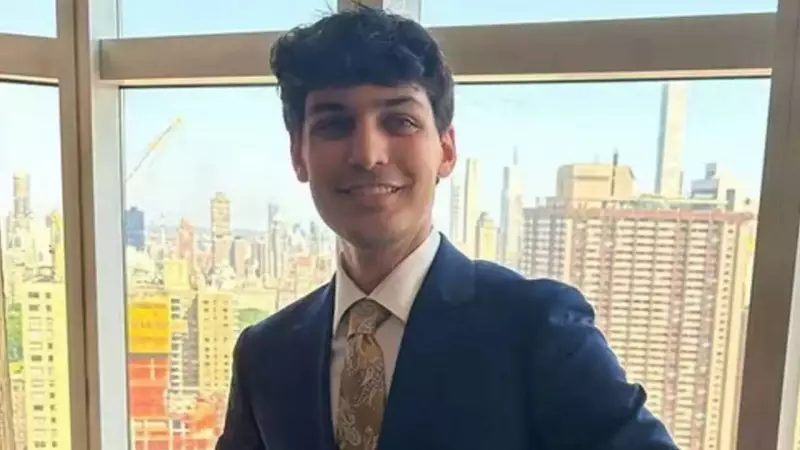
The son of former US ambassador and presidential candidate Nikki Haley has ignited a firestorm of criticism on social media platforms. Nalin Haley's public suggestion that Israeli Prime Minister Benjamin Netanyahu should attend a Catholic Mass as a gesture of Christian solidarity has been met with widespread derision and accusations of hypocrisy.
Social Media Erupts Over Haley's Religious Suggestion
The controversy began when Nalin Haley's comment circulated widely on the platform X late on Sunday. The post prompted an immediate and intense wave of critical responses. Users from various backgrounds questioned the fundamental logic and the underlying intent behind urging a foreign head of state to participate in a specifically Christian religious service.
Many critics framed the remark as a clear example of selective moral signalling. They quickly pointed to the well-documented Sikh heritage of the Haley family and their past public acknowledgements of non-Christian traditions. This juxtaposition led to accusations that Nalin Haley was engaging in performative religiosity, using faith for political optics while overlooking his own family's diverse religious background.

Past Actions and Perceived Inconsistencies Amplify Scrutiny
The online backlash did not focus solely on Nalin Haley's recent statement. A significant portion of the criticism revisited his mother's strong political stance on Israel. Commenters specifically highlighted Nikki Haley's 2024 visit to Israel, during which she signed Israeli artillery shells with the controversial phrase "Finish them." That gesture had drawn international condemnation at the time.
Social media users actively juxtaposed Nalin's call for Christian symbolism with his mother's endorsement of military action. They argued that religious language was being strategically used to soften or legitimise military violence in Gaza. Furthermore, several posts resurfaced old photographs and anecdotes showing Nikki Haley publicly honouring her Sikh father's traditions.
Critics used this evidence to underline what they described as glaring inconsistencies in the family's public messaging on faith, identity, and geopolitics. The core accusation is that religion is being invoked selectively, particularly when it serves a political or foreign-policy objective.
A Broader Debate on Faith and Diplomacy
This incident occurs amid a heightened and ongoing debate in the United States concerning Christian nationalism, immigrant assimilation, and the appropriate role of religion in international diplomacy. Political commentators noted that urging a foreign leader to attend a religious service is a risky proposition. It has the potential to reduce complex geopolitical relationships into simplistic civilisational or faith-based loyalty tests.
The episode demonstrates how quickly personal family history, political associations, and religious identity can collide on the public stage. It raises unresolved questions about how public figures navigate their personal heritage within the framework of their political and diplomatic expressions. The backlash against Nalin Haley serves as a potent reminder that in today's interconnected world, every public statement is subject to intense scrutiny and historical cross-referencing.