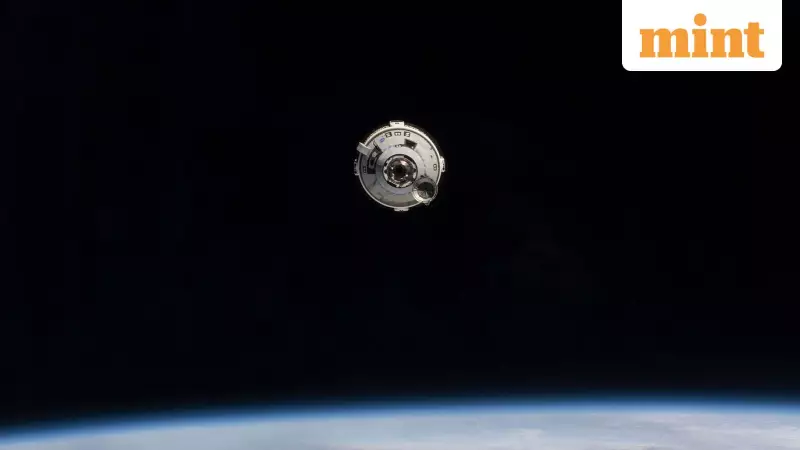
A sudden medical situation involving an astronaut aboard the International Space Station (ISS) has thrown NASA's plans into disarray, prompting the agency to abruptly cancel the first planned spacewalk of 2026 and actively consider bringing the affected crew home ahead of schedule. The development raises significant questions about the immediate schedule of operations on the orbital laboratory.
Medical Concern Leads to Spacewalk Postponement
On Wednesday, NASA confirmed it was monitoring a "medical concern" affecting a single astronaut on the ISS. While the agency stated the situation is stable, it cited privacy rules for not disclosing further details or the crew member's identity. This medical issue directly led to the postponement of a crucial spacewalk that was scheduled for Thursday, January 8.
"NASA is postponing the Thursday, Jan. 8, spacewalk outside the International Space Station," the agency announced. "The agency is monitoring a medical concern with a crew member... The situation is stable." The spacewalk, designated EVA-94, was to be the first extravehicular activity of the year.

Evaluating an Early End for Crew-11 Mission
The implications of the medical event extended quickly beyond the cancelled spacewalk. Shortly after midnight on Thursday, NASA revealed it was assessing whether the SpaceX Crew-11 mission might need to conclude earlier than planned. "Safely conducting our missions is our highest priority, and we are actively evaluating all options, including the possibility of an earlier end to Crew-11’s mission," NASA said in a statement.
The Crew-11 mission arrived at the station aboard a SpaceX Dragon spacecraft. Its planned successor, Crew-12, is not scheduled to launch until no earlier than February 15, 2026. It is currently unclear if NASA can advance that launch date or if logistical hurdles would prevent such a change.
Knock-on Effects for ISS Schedule and Operations
The cancelled spacewalk had significant tasks on its agenda. Astronauts Mike Fincke and Zena Cardman were scheduled to spend about 6.5 hours outside the station. For Fincke, this would have been his tenth career spacewalk, a milestone achieved by only five other U.S. astronauts before him.
Their primary objective was to prepare the station's 2A power channel for the future installation of the final pair of ISS Roll-Out Solar Arrays (iROSAs), which are scheduled to arrive later in 2026. "Once this mod kit is complete, we have one more to do," said Bill Spetch, operations integration manager for NASA’s ISS programme.
The disruption doesn't end there. Another spacewalk, EVA-95 scheduled for January 15, is now also in question. That outing was set to include maintenance work like replacing an HD camera, installing a navigational aid, and relocating ammonia service jumpers to add redundancy to the station's power system.
As a precautionary measure, NASA also took its live video and audio feeds from the ISS offline around the time of the initial announcement. The agency has stated it will provide further updates on both the medical situation and the rescheduled spacewalk within the next 24 hours, as teams on the ground work to manage this unexpected challenge in orbit.