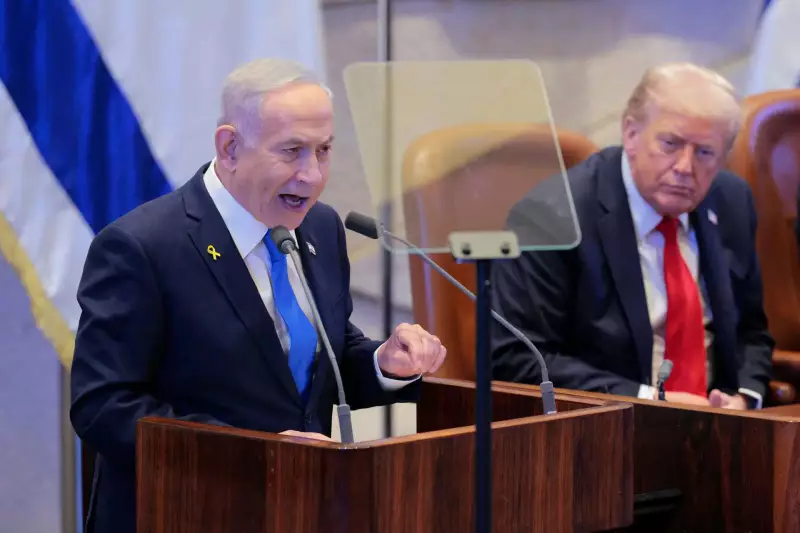
Israeli Prime Minister Benjamin Netanyahu has publicly addressed recent remarks made by former US President Donald Trump, who described him as a challenging leader to work with. Netanyahu framed this perceived toughness as a necessary component of his duty to safeguard Israel's future.
Netanyahu's Firm Response to Trump's Characterization
In an interview with CBS News on Tuesday, Netanyahu reacted to Trump's comment that the Israeli leader "isn't the easiest guy to deal with." Netanyahu stated, "Well, I hope he says that because I'm very tough on the matters that pertain to my country's future." This exchange followed Trump's speech a day earlier in the Israeli Knesset, where the former US president participated in events related to a hostage-prisoner swap between Israel and Hamas, a deal he helped facilitate.
During his Knesset address, Trump had elaborated on his view, saying, "...and he (Netanyahu) is not easy, I want to tell you. He’s not the easiest guy to deal with, but that’s what makes him great. That’s what makes him great. Thank you very much, Bibi. Great job." Trump later traveled to Egypt for a Gaza peace summit with other global leaders.

"My Job is to Protect the Jewish State"
Central to Netanyahu's response was a forceful declaration of his primary responsibility. "It is always the responsibility of the leader of the Jewish state to ensure that the Jewish state’s very existence is never imperiled," asserted Israel's longest-serving prime minister. He explained that this core duty guides his decisions, including when to cooperate with allies and when to refuse their requests.
"When I believe that what I'm asked to do is fine, I say (it) is, and when I think I have to say 'no,' I say it. And that's my job. My job is to protect the Jewish state and assure the future of the Jewish people," Netanyahu told CBS News.
Historic Actions and the Iran Strikes
Netanyahu directly linked this philosophy of protective leadership to his decision to order military strikes against Iran. He referenced actions taken during a 12-day conflict in June, which involved the United States as Israel's ally. "I did the things I did, including the strikes against Iran. I took the historic action against Iran that threatened to annihilate us, throw atomic bombs at us," Netanyahu stated, justifying his aggressive posture as a matter of national survival.
This public dialogue between the two leaders highlights the complex dynamics of the US-Israel relationship, where steadfast support is often coupled with behind-the-scenes friction. Netanyahu's comments reinforce his long-standing image as a leader who prioritizes Israeli security above diplomatic pleasantries, even with the nation's closest allies.