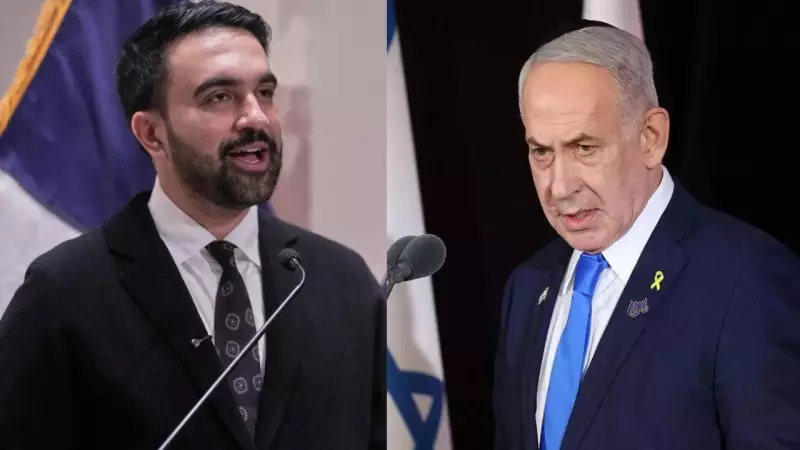
Israeli Prime Minister Benjamin Netanyahu has defiantly announced he will proceed with a planned visit to New York City, brushing aside threats of arrest from the city's incoming mayor, Zohran Mamdani. The controversy stems from an International Criminal Court (ICC) warrant against Netanyahu related to the war in Gaza.
A Defiant Stance from the Israeli Leader
During a virtual interview with The New York Times on Wednesday, Netanyahu was clear about his intentions. "Yes, I'll come to New York," he stated firmly. When questioned about whether he would attempt to engage with Mayor-Elect Mamdani, Netanyahu set a stark condition for dialogue. He said, "If he changes his mind and says that we have the right to exist, that'll be a good opening for a conversation."
This response directly targets Mamdani's political stance. The Democratic Socialist, who is poised to become New York's first Muslim and first South Asian mayor, is a vocal supporter of Palestinian rights. He has advocated for a free Gaza and has accused the Israeli Defence Forces of committing war crimes and genocide. Notably, Mamdani has refused to affirm Israel's right to exist as a Jewish state.

The Source of the Conflict: The ICC Warrant
The core of this diplomatic friction is an action by the International Criminal Court. Earlier this year, Mamdani vowed that, once in office, he would instruct the New York Police Department (NYPD) to enforce any arrest warrants issued by the ICC against world leaders accused of war crimes. This list includes both Netanyahu and Russian President Vladimir Putin.
The ICC's move came last year when it stated it had reasonable grounds to believe Netanyahu was responsible for alleged war crimes and crimes against humanity during Israel's military offensive in Gaza. This campaign was launched in response to the Hamas attack on October 7, 2023. Israel has consistently and vehemently rejected these accusations. Along with the United States and Russia, Israel is not a member of the ICC and does not recognize its jurisdiction.
Legal Hurdles and Political Realities
Despite the strong rhetoric from the mayor-elect's office, legal experts consider the actual arrest of a sitting Israeli prime minister on U.S. soil to be highly improbable. Serious questions exist about whether a city mayor possesses the authority to enforce international arrest warrants, a power typically held at the federal level.
The United States federal government controls immigration and entry matters. Historically, Washington has been a steadfast defender of Israel, with administrations, including the recent Trump administration, providing billions in military aid. Furthermore, under existing U.S. agreements, visas are routinely issued for official visits to the United Nations, which is headquartered in New York.
New York City itself is home to the largest Jewish population outside of Israel, and Netanyahu has frequently visited for official UN business. While the threat adds a layer of tension, the practical and political barriers to an arrest are significant. A precedent exists where the U.S. federal government has denied entry, such as with Palestinian leader Mahmoud Abbas during the Trump era, highlighting where the ultimate authority lies.
This standoff sets the stage for a complex confrontation between municipal political symbolism and the realities of international diplomacy and federal law when Netanyahu's visit eventually occurs.