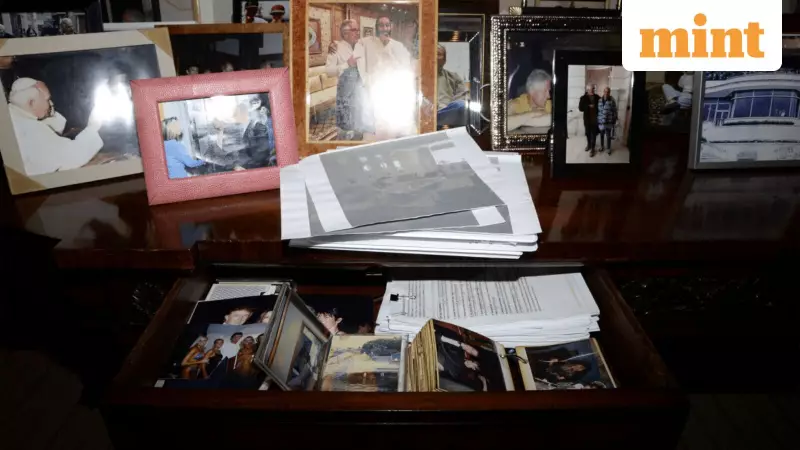
The US Justice Department has made public a second, massive collection of files related to the late financier and convicted sex offender Jeffrey Epstein. This latest release, comprising roughly 11,000 documents, includes startling items such as a fabricated video of Epstein's suicide and images of a fraudulent passport, while also exposing internal tensions within the government teams handling the high-profile case.
Fake Evidence and International Intrigue
Among the newly disclosed materials is a grainy 12-second video clip that falsely purported to show Epstein's 2019 suicide inside his Manhattan jail cell. The file was included because an individual sent it to the FBI in 2021, asking investigators to verify its authenticity. In an accompanying email, the sender claimed to be documenting a cover-up at a federal prison.
Equally intriguing is the inclusion of images of an expired Austrian passport discovered by FBI agents in a safe at Epstein's New York townhouse in 2019. The passport bore Epstein's photograph but was issued under the alias Marius Fortelni, identified as a real estate developer with a listed residence in Saudi Arabia. The purpose of this falsified document remains a key point of speculation.

Internal Friction and Heavy Redactions
The trove largely consists of court records and emails from Epstein's 2008 non-prosecution agreement, his 2019 prosecution, and the 2020 case against his associate, Ghislaine Maxwell. These communications reveal significant friction between agencies. In one stark example from March 2020, a redacted federal prosecutor from the Southern District of New York complained bitterly about the FBI's handling of evidence, writing, "the FBI is completely fucking us on this," regarding the processing of over 60 seized devices.
The documents are heavily redacted, with many names of senders and recipients concealed. This includes a 2021 email describing a photograph of former President Donald Trump with Ghislaine Maxwell, retrieved from an iPhone 7 belonging to Steve Bannon. The attached screenshot of the photo itself was fully redacted.
Legal Maneuvering and Political Reactions
The files shed new light on the legal strategies employed by Epstein's powerful defense team, which included lawyers like Alan Dershowitz and the late Kenneth Starr. In a June 2008 email, Starr argued that Epstein was only targeted because of his "personal wealth and publicly-reported ties to former President Bill Clinton." This lobbying contributed to Epstein securing a controversial plea deal with an 18-month state jail sentence in Florida.
Epstein later attempted to have that sentence shortened by falsely claiming he was cooperating on the federal prosecution of Ponzi schemer Bernie Madoff. An assistant U.S. attorney promptly debunked this in a 2009 email, stating Madoff's prosecutor had no idea who Epstein was.
The document releases have drawn sharp political reactions. On Monday, former President Donald Trump lamented the publication of photos linking people to Epstein, calling it "a terrible thing" that ruins reputations. He confirmed that photos of him exist in the files, though few have surfaced. This second batch follows an initial release mandated by Congress, which included images of Bill Clinton and other celebrities and was criticized for being incomplete and overly redacted.
The Justice Department has stated it is reviewing and redacting materials before release, which led to the temporary removal of files over the weekend. The agency has not commented on the specific changes made to the published documents.