The Trump administration has informed lawmakers that the US Justice Department has formulated a fresh legal opinion to defend the controversial military operation that led to the seizure of Venezuelan President Nicolás Maduro. This development comes amidst growing unease among legislators about the scale of American military involvement in the South American nation.
Lawmakers Briefed on Legal Rationale
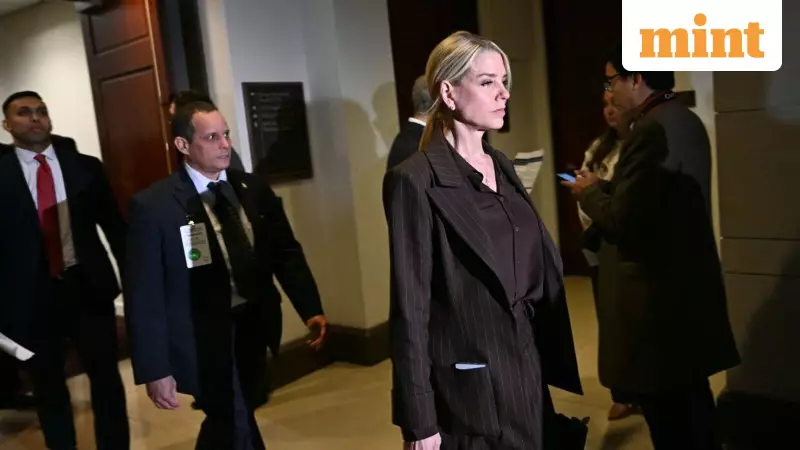
Attorney General Pam Bondi assured lawmakers this week that they would soon have access to the crucial document, according to Representative Jim Himes, a Democrat from Connecticut. Himes, who holds the position of ranking member on the House Intelligence Committee, stated his belief that the Justice Department's opinion will assert the operation's legality by framing it as support for a law enforcement action.
Since the US military incursion into Venezuela, senior officials from the Trump administration have consistently described the raid as part of a law enforcement effort. However, this characterization has failed to quell significant concerns from Democratic members of Congress. They fear the action establishes a dangerous precedent, potentially authorising further US military interventions in Venezuela, especially if the country's security situation worsens, and legitimising the use of lethal force in other regions.

Democratic Backlash and Historical Precedents
Senate Minority Leader Chuck Schumer, a Democrat from New York, voiced sharp criticism following a briefing for senators on the operation. "What's next? Is Greenland next? Is Colombia, Mexico or Cuba next?" Schumer questioned on Wednesday. In response, the Senate is scheduled to vote next week on a bipartisan war-powers resolution aimed at preventing any additional military action in Venezuela. The resolution requires only a simple majority to pass.
This new legal document adds to the Trump administration's existing framework justifying its substantial military buildup and recent activities in and around Venezuela. Earlier, in July, the Justice Department's Office of Legal Counsel (OLC) provided a separate justification for the administration's strikes on vessels suspected of drug trafficking in the Caribbean and Eastern Pacific. That memo argued that President Trump's designation of criminal drug networks as foreign terrorists rendered them valid military targets.
The OLC, a powerful internal advisory body, has a history of providing legal cover for expansive assertions of presidential power regarding national security and the use of force. A notable precedent is the 1989 "abduction opinion" authored by then-Assistant Attorney General William Barr during the George H.W. Bush administration. That memo, which formed the legal basis for the operation to capture Panamanian leader Manuel Noriega, asserted the president's authority to authorise extraterritorial arrests.
Ongoing Tensions and Future Risks
Democrats in Congress continue to challenge the administration's rationale for the operation that captured Maduro and his wife. Connecticut Senator Chris Murphy, a senior Democrat on the Senate Foreign Relations Committee, labelled the action "wildly illegal" in a recent television interview.
President Trump has since issued threats of further military action against Delcy Rodríguez, Venezuela's interim president, if she does not comply with US demands for increased access to the country's vast oil reserves or initiate a transition towards elections. Analysts warn that if Rodríguez fails to maintain order, Venezuela's numerous armed groups, criminal networks, and rival political factions could plunge the nation into a violent power struggle.
Furthermore, experts highlight the risks associated with Trump's stated desire to rebuild Venezuela's oil infrastructure. Robert Pape, an insurgency and warfare expert at the University of Chicago, cautioned that Venezuela's oil represents "liquid gold," and the notion that any Venezuelan faction would willingly hand over control to foreign entities is unrealistic and could provoke lethal conflict.