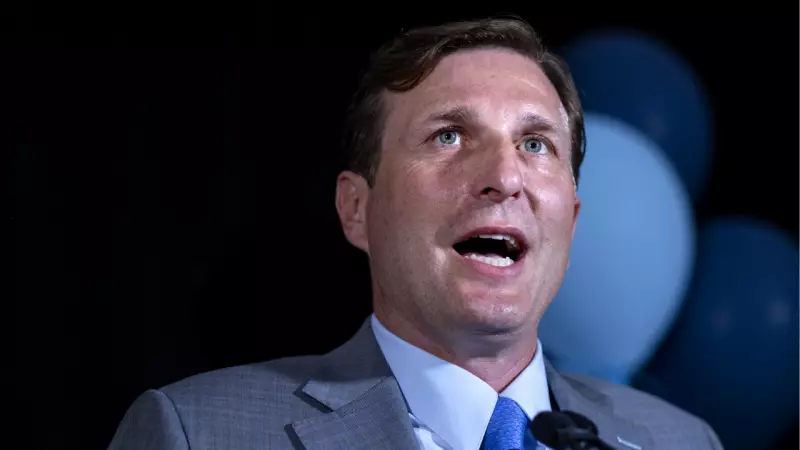
In a bold move aimed at America's wealthiest individuals, Congressman Dan Goldman has unveiled new legislation he calls the 'Robinhood' Act. The bill directly targets the ultra-rich, including Tesla CEO Elon Musk and Amazon co-founder Jeff Bezos, seeking to close a significant tax loophole that allows billionaires to pay minimal taxes.
The ROBINHOOD Act: A New Tax on the Ultra-Wealthy
Congressman Goldman formally introduced the Redistribution of Billions by Instituting New High-Income Obligations on Overlooked Debt (ROBINHOOD) Act. This proposed federal tax legislation is designed to eliminate a major flaw in the US tax system. Currently, billionaires can borrow massive sums against their assets—like stock portfolios, real estate, and art—without paying income tax on that borrowed money, resulting in extremely low effective tax rates.
Goldman highlighted the stark contrast with ordinary citizens. He stated that while average New Yorkers live paycheck to paycheck and pay taxes on every dollar they earn, billionaires effectively live tax-free by leveraging their wealth. "Billionaires live tax-free by borrowing against their stock portfolios, real estate holdings, and art collections without paying a dime in taxes on that money," he argued.

How the Bill Works and Its Potential Impact
The proposed ROBINHOOD Act would impose a 20% excise tax on loans and lines of credit that are backed by capital assets. This tax would apply to individuals earning over $400,000 annually (or $450,000 for joint filers). It covers personal financial investments in stocks, bonds, private equity, real estate, digital assets, and collectibles. However, exemptions are included for home mortgages, home equity loans, and farmland credit to protect middle-class homeowners and farmers.
The financial implications are substantial. According to Congressman Goldman's estimates, this legislation could generate at least $276 billion over the next decade. He pledged that this revenue would be invested in critical social programs. "This bill will generate hundreds of billions of dollars to invest in universal pre-K, child care, and working families instead of subsidising billionaires’ yachts and private islands," Goldman asserted, emphasising the need for the wealthiest to pay their fair share.
The 'Borrow, Buy, Die' Strategy and Staggering Numbers
The bill addresses a well-documented strategy known as "Borrow, Buy, Die" used by the ultra-wealthy. Instead of selling assets and incurring capital gains taxes, they take out loans against their appreciating assets. This allows them to access vast liquidity while deferring or avoiding taxes indefinitely.
A landmark 2021 investigation by ProPublica revealed the scale of this issue. It found that America's 25 richest people paid an average effective tax rate of just 3.4%, far below the top federal income tax bracket. The investigation provided specific examples:
- Elon Musk paid an effective tax rate of 3.3%.
- Jeff Bezos paid approximately 1%.
- Warren Buffett paid a mere 0.1%.
In 2022 alone, Elon Musk had pledged a staggering $94 billion worth of Tesla shares as collateral for personal loans. Furthermore, the wealthiest 1% of Americans collectively borrowed over $1 trillion using similar asset-backed loan strategies in the same year, underscoring the widespread use of this tax-avoidance mechanism.
The introduction of the ROBINHOOD Act marks a significant political effort to reform the US tax code and address growing economic inequality. By targeting the specific financial practices of the ultra-wealthy, the bill aims to restore what its proponents call "basic fairness" to the system.