

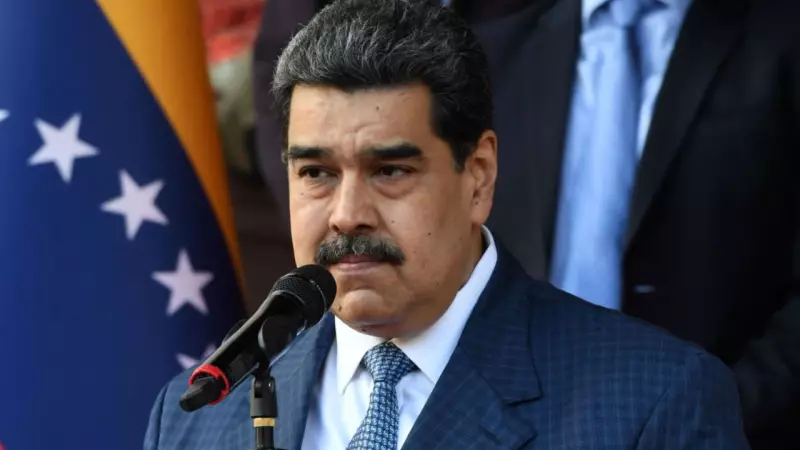
The political saga of Venezuela's President Nicolas Maduro is a tale that defies conventional political analysis. His journey to the top, and his struggle to stay there, is woven with threads of loyalty, mysticism, controversy, and sheer survival against overwhelming odds. As external pressure from the United States and internal economic collapse threaten his regime, Maduro's story remains one of the most peculiar in modern global politics.
From Humble Beginnings to Absolute Power
Nicolas Maduro's origin story is central to his political image. Long before entering the national arena, he worked as a bus driver in the capital city of Caracas. He built his political foundation within the transport unions, a background he has consistently used to portray himself as a man connected to the common people. This narrative persisted even after he assumed the presidency and consolidated power.
His ascent was not due to overwhelming charisma but unwavering loyalty. He was not the most dynamic figure among Hugo Chávez's lieutenants, but he was arguably the most devoted. This fidelity was rewarded when Chávez personally anointed him as his successor shortly before dying in 2013. While the decision raised eyebrows within their socialist movement, it was ultimately accepted, setting the stage for Maduro's controversial presidency.

A Rule Marked by Controversy and Mysticism
Maduro's grip on power has been perpetually questioned. His initial electoral victory in 2013 was by a razor-thin margin and was immediately disputed. Every election that followed has been clouded by serious allegations from the opposition and international observers, ranging from voter suppression to outright fraud. This has created a continuous crisis of legitimacy for his government.
Beyond the political battles, Maduro's rule has taken on a quasi-mystical tone. Shortly after Chávez's death, he made a startling public claim: that Chávez's spirit had visited him in the form of a "little bird." While ridiculed abroad, this assertion was presented seriously within Venezuela, blending revolutionary ideology with spiritual symbolism.
This mysticism extends to his personal devotion to the Indian spiritual leader Sai Baba. Introduced to the guru by his wife, Cilia Flores, after a 2005 visit to India, this faith later entered his public life in an unprecedented way. When Sai Baba died in 2011, Maduro, then serving as Foreign Minister, pushed for Venezuela to declare an official state of mourning—a rare act of national grief for a foreign spiritual figure.
Survival Against All Odds
Maduro's presidency has been a marathon of survival. In 2018, he survived an assassination attempt when drones carrying explosives detonated near him during a military parade in Caracas. Unharmed, his supporters hailed it as divine protection, while critics questioned the event's circumstances. Regardless, it fortified his image as a leader under siege.
The siege is also economic. Under his watch, Venezuela has suffered one of the worst peacetime economic collapses in history, characterized by hyperinflation, crippling shortages, mass emigration, and the decay of public institutions. Yet, his regime endures, relying on a mix of security force control, political repression, and patronage networks.
On the international stage, his position is uniquely precarious. The United States has accused him of drug trafficking and corruption, placing a multi-million dollar bounty for information leading to his arrest. This extraordinary status for a sitting head of state dictates every aspect of his foreign policy and isolates him globally.
Throughout these trials, Maduro frames his endurance as evidence of a preordained destiny and a historical revolutionary mission. He invokes spiritual guidance and the mythology of Chávez's Bolivarian Revolution. Yet, the reality is a leader constantly under threat—from international arrest warrants, devastating sanctions, and persistent rumors of plots to remove him from power.

The Takeaway: A Legacy of Contradictions
Nicolas Maduro's career is a study in stark contrasts. He presides over material collapse while using mystical language. He employs revolutionary rhetoric while embracing personal spiritual shrines. He claims a destined path even as he is pursued by international courts. Whether his rule eventually ends by judicial action, political upheaval, or historical judgment, the chapter he has written in Latin American politics will be remembered as one of the strangest and most contentious.





