

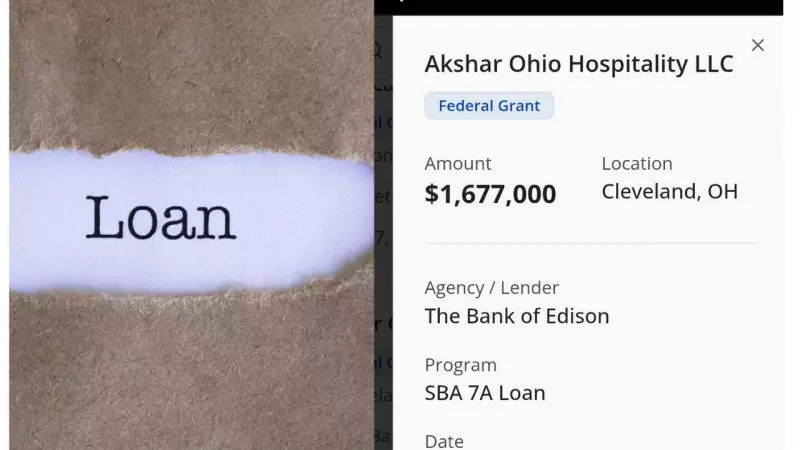
A social media post that went viral on platform X has ignited a heated debate among residents of Ohio, USA. The contentious claim centers on a substantial $1.677 million loan from the Small Business Administration (SBA) reportedly granted to hotel owners of Indian origin. This has prompted serious questions about the allocation of American taxpayer money, especially against the backdrop of rising property taxes in the state.
The Viral Claim and Its Origins
The controversy began when a user on X posted, "Here's where your Ohio tax dollars are going. SBA Loan $1,677,000 for Indian hoteliers." The user supported the claim with screenshots that seemed to originate from official federal spending databases like USAspending.gov. These records allegedly linked the loan to a company operating properties such as the Microtel Inn & Suites in Cambridge, Ohio.
Further scrutiny of ownership records pointed towards connections with the Patel family, a surname widely recognized within the Indian-American community, particularly in the hospitality sector. This detail added fuel to the online discussion, framing the issue within a broader narrative about immigrant business ownership.

A Deep-Rooted Legacy in American Hospitality
This incident is far from an isolated case. For decades, Indian-Americans have played a pivotal role in shaping the US hotel industry. According to the Asian American Hotel Owners Association (AAHOA), this community owns approximately 60 per cent of all hotels across the nation. This translates to more than 34,000 properties.
The foundation of this remarkable dominance was laid in the 1970s. Immigrants, primarily from the Gujarat region in India, began purchasing struggling or budget motels. They operated them as tight-knit family businesses, relying on community networks, pooled family savings, and financial tools like SBA loans, which are accessible to eligible immigrants and citizens alike. This model of entrepreneurship has grown into a multi-billion dollar contribution to the American economy.
Backlash and Broader Questions
However, the viral post has tapped into underlying tensions. Critics, including some aligned with MAGA activism, argue that certain loan programs might inadvertently favor new immigrants over local American buyers. The social media discourse quickly filled with questions about the legality and fairness of such loans.
One user questioned, "SBA loans are for small American businesses, not already established corporations. Why is this legal?" The original poster added to the skepticism by replying, "Good question. They also took a lot of PPP. I haven't verified yet but this group operates nationally, notably Washington from what I'm finding."
Another comment expanded the scope, claiming, "Indian nationals own almost all gas stations & several hotels in NY," to which a reply simply stated, "We were sold out." These exchanges highlight a complex mix of economic anxiety, misinformation, and genuine inquiry about federal spending priorities.
The row in Ohio underscores a recurring clash between the celebrated narrative of immigrant success and populist concerns over resource allocation. While the facts confirm the immense, lawful contribution of Indian-American entrepreneurs to a key US industry, the debate reveals the potent political and social emotions surrounding immigration, taxpayer money, and the evolving face of American small business.






