In a fiery response that has captured national attention, US Congresswoman Ilhan Omar has vehemently condemned former President Donald Trump for alleged derogatory comments targeting the Somali community. The incident adds to a week of significant international developments, including high-level diplomacy between Russia and India, escalating tensions over Ukraine, and a breakthrough in a domestic terrorism investigation.
Omar's Fiery Retort to Trump's Alleged Remarks
Democratic Representative Ilhan Omar, herself a Somali-American, expressed outrage over reports that Donald Trump used insulting and Islamophobic language to describe Somali immigrants. According to sources, Trump referred to them using the term "stinky" during a private conversation. Omar labeled the comments as "bigoted" and "Islamophobic," reflecting a deep-seated pattern of rhetoric from the former president.
This is not the first time Omar has clashed with Trump. She launched a second sharp critique, highlighting what she sees as his consistent use of divisive language against immigrant communities and minorities. The exchange underscores the ongoing cultural and political fractures in American politics as the election cycle intensifies.

Global Stage: Diplomacy and Conflict
On the international front, a significant display of camaraderie was seen in New Delhi. Russian President Vladimir Putin and Indian Prime Minister Narendra Modi shared a car ride from the airport, signaling close bilateral ties. PM Modi later shared an inside look at their meeting, which is expected to cover crucial issues of trade, defense, and energy cooperation amidst global sanctions on Russia.
Meanwhile, the war in Ukraine continues to create ripples across alliances. In a leaked call with EU leaders, French President Emmanuel Macron reportedly issued a stark warning, suggesting that Donald Trump might "betray" Ukrainian President Volodymyr Zelenskyy by favoring Putin in future peace negotiations. This has raised alarms in European capitals about the future of Western support for Kyiv.
In a related development, Hungary has launched a strong critique against the European Union, accusing the bloc of "dumping" peace efforts and allowing other European nations to call the shots in the Ukraine conflict. This highlights the growing dissent within the EU regarding the strategy on Russia.
Adding to the geopolitical drama, Chinese President Xi Jinping publicly defended his Russian counterpart during talks with Macron, urging the West not to blame Putin for the war. This firm stance from Beijing solidifies the China-Russia partnership as a major factor in any potential peace process.
Domestic US Developments: Security and Politics
Back in the United States, the FBI announced a major breakthrough in the investigation of the January 6th Capitol riot. Authorities have arrested a suspect, Brian Cole, in connection with a pipe bomb plot discovered that day. The arrest comes after an extensive multi-year investigation into one of the most alarming threats associated with the attack on the US Capitol.
In a separate incident underscoring domestic gun violence, a gunman attacked police officers at a gas station in Omaha. This occurred shortly after an ambush targeting the DC National Guard, pointing to a tense climate for law enforcement.
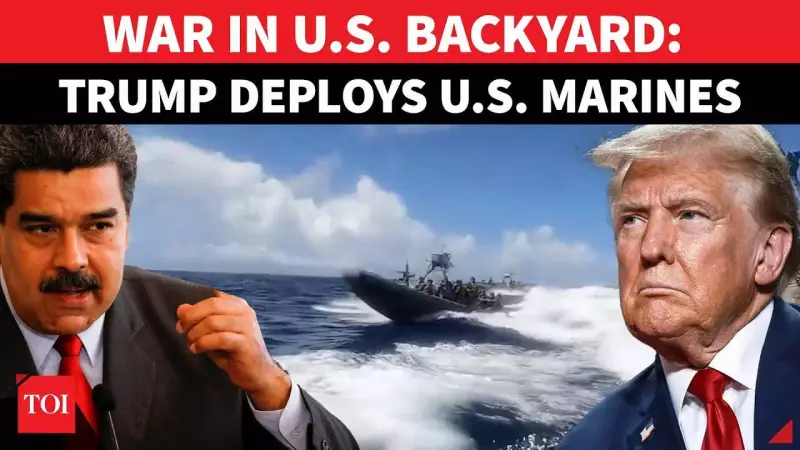
Furthermore, a classified US Senate briefing was left in stunned silence when Admiral Bradley played a video of a military strike. Senators were reportedly shown graphic footage where "you saw them flipping the boat," illustrating the brutal reality of overseas operations.
Finally, Pentagon spokesman Pete Hegseth faced criticism over alleged harsh rhetoric but stood his ground during a Christmas tree lighting ceremony, delivering a strong message against narco-terrorist groups.
Analysis and Implications
The convergence of these events paints a picture of a world grappling with intense political polarization, both domestically and internationally. Omar's reaction to Trump's comments highlights the ongoing battle over identity and immigration in America. Simultaneously, the diplomatic maneuvers between India, Russia, the US, and Europe reveal a rapidly shifting global order where traditional alliances are being tested.

The progress in the January 6th investigation offers a measure of accountability, yet the continued political violence and sharp rhetoric suggest deep unresolved tensions. As world leaders navigate the Ukraine war and its global fallout, the choices made in the coming months will significantly shape international stability and the domestic political landscape in numerous countries, including India which maintains a delicate balancing act between major powers.