Hungary's Orban Issues Ultimatum to EU Over Ukraine and Russia Policies
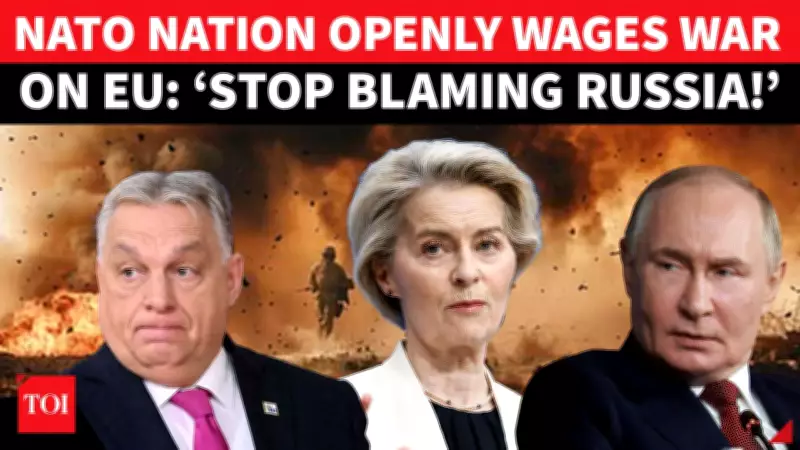
In a dramatic escalation of intra-European tensions, Hungarian Prime Minister Viktor Orban has declared his government will block the European Union's proposed 20th sanctions package against Russia and a massive €90 billion aid loan to Ukraine. This stern warning comes amid a deepening energy dispute between Budapest and Kyiv, centered on the flow of Russian crude oil through the critical Druzhba pipeline.
Energy Security at the Heart of the Conflict
Orban stated that Hungary's countermeasures are a direct response to Ukraine's decision to halt Russian crude oil shipments via the Druzhba pipeline, a vital artery for Hungarian energy supplies. "Our actions are aimed at government policy, not the Ukrainian people," Orban clarified, attempting to draw a distinction between political and humanitarian dimensions. He insisted that Hungary's domestic energy security remains stable for now but revealed a significant retaliatory step: Budapest has stopped diesel exports to Ukraine.
The Hungarian leader accused Kyiv of violating its commitments to the European Union by blocking access to cheaper Russian oil supplies. "Ukraine is preventing the flow of affordable energy, contravening the spirit of European solidarity," Orban asserted. In contrast, Ukrainian officials blame the disruption on relentless Russian missile and drone strikes targeting energy infrastructure, framing it as a consequence of Moscow's aggression rather than a policy choice.

A Political Standoff with Far-Reaching Consequences
Orban's ultimatum places the European Union in a precarious position. The proposed €90 billion aid package is seen as crucial for sustaining Ukraine's economy and military efforts against Russian invasion. Simultaneously, the 20th sanctions package aims to further isolate Moscow economically. Hungary's potential veto, leveraging its unanimous voting rights in certain EU matters, could derail both initiatives, exposing deep fractures within the bloc.
The core demand from Budapest is clear and non-negotiable: the resumption of Russian crude oil flows via the Druzhba pipeline. Orban signaled that without this concession, Hungary will exercise its blocking power, stating bluntly that there will be "no money for Kyiv" and no new sanctions on Moscow. This stance highlights the collision between national energy security interests and collective European foreign policy on the Ukraine war.
Broader Implications for European Unity
This standoff underscores the growing tensions within the European Union as member states grapple with competing priorities:
- Energy Security vs. War Policy: Hungary prioritizes stable, affordable energy imports, even from Russia, over supporting Ukraine's war effort.
- National Sovereignty vs. Collective Action: Orban's move asserts Hungary's right to independent policy, challenging EU consensus.
- Economic Realities vs. Geopolitical Goals: The dispute reveals the practical costs of decoupling from Russian energy amid ongoing conflict.
The situation remains fluid, with diplomatic channels likely to be tested in the coming days. As Orban digs in, the European Union faces a critical test of its cohesion and ability to balance diverse member state interests against the backdrop of a protracted war. The outcome could set a precedent for how the bloc manages internal dissent on key geopolitical issues moving forward.