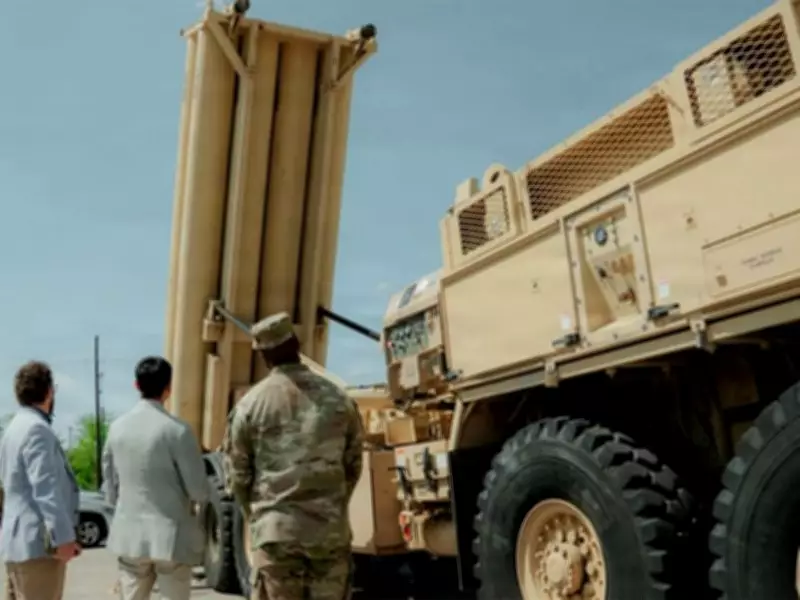
Pentagon officials have admitted that the United States is relatively undefended against missile threats from China and Russia, as the Trump administration pushes for a 'Golden Dome' shield. The acknowledgment comes amid growing concerns over the nation's ability to counter advanced missile systems developed by these rival powers.
Current Vulnerabilities
During a congressional hearing, senior Pentagon officials revealed that the U.S. missile defense system has significant gaps, particularly against hypersonic weapons and advanced cruise missiles. General John Smith, head of the Missile Defense Agency, stated, 'We are not where we need to be. Our current architecture is designed for a different threat environment.'
The officials highlighted that while the U.S. has robust defenses against intercontinental ballistic missiles (ICBMs), it lacks adequate coverage against intermediate-range missiles and emerging technologies. This vulnerability is especially acute in the Pacific theater, where China has deployed a vast arsenal of conventional and nuclear-capable missiles.

Challenges from Russia and China
Russia has also made significant strides in missile technology, including the development of the Avangard hypersonic glide vehicle and the nuclear-powered Burevestnik cruise missile. These systems are designed to evade existing U.S. missile defenses, posing a direct challenge to national security.
China, meanwhile, has expanded its missile forces rapidly, with over 2,000 ballistic and cruise missiles capable of reaching U.S. bases in Asia and potentially the mainland. The Pentagon's 2023 China Military Power Report noted that Beijing is investing heavily in hypersonic weapons and anti-satellite capabilities.
The Golden Dome Proposal
In response to these threats, the Trump administration has proposed the 'Golden Dome' missile shield, a layered defense system inspired by Israel's Iron Dome but scaled for national coverage. The plan envisions a combination of ground-based interceptors, space-based sensors, and directed-energy weapons to detect and destroy incoming missiles at various stages of flight.
Supporters argue that the Golden Dome would provide a comprehensive defense against a wide range of threats, from short-range rockets to intercontinental missiles. However, critics question its feasibility and cost, with estimates ranging from $100 billion to over $1 trillion. Some experts warn that such a system could provoke an arms race and destabilize strategic deterrence.
Despite these concerns, the Pentagon has begun preliminary studies and is seeking increased funding for research and development. The push for the Golden Dome reflects a broader shift in U.S. defense strategy towards active defense, as adversaries continue to modernize their missile arsenals.