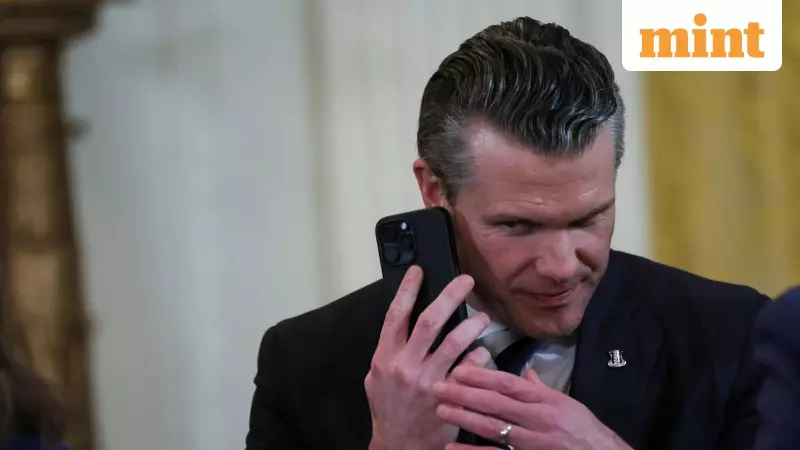
A damning report from the Pentagon's internal watchdog has concluded that War Secretary Pete Hegseth endangered American personnel and their mission by using the encrypted Signal messaging app to share sensitive operational details about a military strike against Yemen's Houthi militants. The findings, based on sources familiar with the report who spoke to The Associated Press on Wednesday, highlight a significant breach of security protocols.
Signal Chats Shared Strike Details Before Jets Were Airborne
The investigation revealed that in at least two separate Signal chat groups, Hegseth provided highly specific information, including the exact timings of warplane launches and when bombs would be dropped. Crucially, this information was shared before the pilots and crew tasked with carrying out the attacks on behalf of the United States were even airborne. The use of the personal, non-secure app for such communications violated Pentagon policy, according to the report.
One source noted that Hegseth possesses the authority to declassify information, and the inspector general did not find that he exercised this power improperly in this instance. However, the report explicitly states he broke rules by using a personal device for official matters and has recommended enhanced training for all Pentagon officials to prevent future lapses.

A Journalist Inadvertently Added to Sensitive Chat
The controversy first erupted when Jeffrey Goldberg, a journalist from The Atlantic magazine, was accidentally added to a Signal text chain by then-national security adviser Mike Waltz in March. This high-level group included Vice President JD Vance, Secretary of State Marco Rubio, and Director of National Intelligence Tulsi Gabbard, discussing military operations planned for March 15 against the Iran-backed Houthis.
Separately, as reported by AP, Hegseth had created another Signal chat with 13 individuals, including his wife and brother, where he shared similar granular details of the same impending strike. While Signal is encrypted, it is not authorized for transmitting classified information and is not part of the Pentagon's secure communications network.
Political Fallout and Hegseth's Defense
The findings have intensified scrutiny on the former Fox News host, with Democratic lawmakers and some Republicans arguing that sharing such precise information before an operation jeopardized pilots' lives. They contended that a lower-ranking service member would have been fired for a similar security failure.
Hegseth, who declined an interview with the inspector general but provided a written statement, has consistently defended his actions. He maintained that the information shared was unclassified and that he only disclosed details he believed "would not endanger the mission." In an April interview with Fox News Channel, he described the messages as "informal, unclassified coordinations, for media coordinations and other things."
The Pentagon's chief spokesman, Sean Parnell, declared the review a "TOTAL exoneration," stating it proved no classified information was shared and that "the case is closed." The White House also backed Hegseth, with press secretary Karoline Leavitt saying President Donald Trump "stands by" his war secretary and that the probe affirmed no classified data was leaked.
Despite this support, critics remain vocal. Senator Mark Warner of Virginia stated, "This was not an isolated lapse. It reflects a broader pattern of recklessness and poor judgment." The inspector general's investigation was initiated at the bipartisan request of the Senate Armed Services Committee leadership.
The report also faced procedural hurdles. Investigators had to rely on screenshots of the Signal chat published by The Atlantic because Hegseth could only provide a small handful of his own messages. A partially redacted version of the full report is expected to be released to the public later this week.