

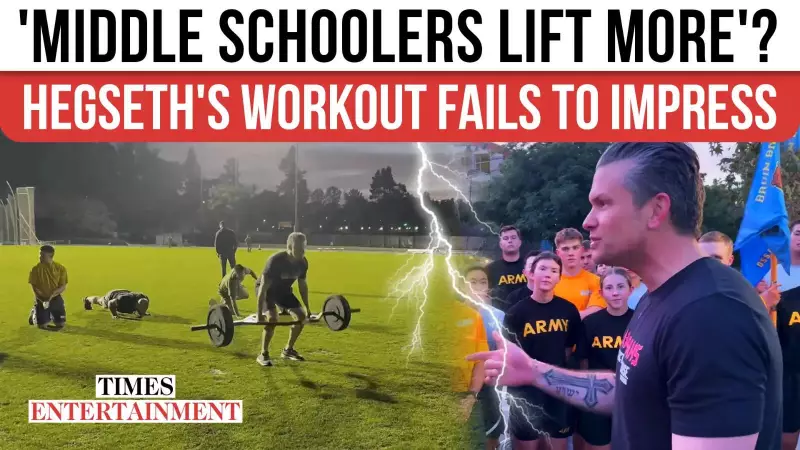
In a move intended to project strength and leadership, Pete Hegseth, the Secretary of War in the Trump administration, has instead found himself at the centre of a brutal online storm. Videos of his pre-dawn workout session with UCLA ROTC cadets, which he shared publicly, have gone viral for all the wrong reasons, sparking widespread mockery and debate about performative politics.
From Strength Display to Meme Fest: What Went Wrong?
The incident occurred on January 10, 2026. Hegseth, aiming to showcase discipline and camaraderie, joined the young cadets for an early morning fitness routine. However, the focus quickly shifted from his message to his method, particularly when clips of him attempting deadlifts circulated online. Fitness enthusiasts and casual observers alike took to social media platforms to criticise what they termed as poor form, questionable weight selection, and an overall display they found "painful to watch."
Instead of the intended image of a robust leader, the internet swiftly transformed the moment into a meme fest. Users created side-by-side comparisons, slow-motion analyses, and humorous captions that highlighted the perceived flaws in his exercise technique. The backlash was not about political affiliation for many commentators but centered purely on the execution of the workout, with many expressing concern over the risk of injury from improper lifting.

A Divided Response: Supporters Clash with Critics
As the online ridicule gained momentum, a contingent of Hegseth's supporters rushed to his defence. They argued that the attempt to engage with future military officers was commendable, emphasising the value of a leader who is willing to step out of his comfort zone and train alongside cadets. They dismissed the criticism as nitpicking from keyboard warriors who missed the broader point of solidarity and physical fitness.
Nevertheless, the critical chorus was louder and more pervasive. The episode reignited a broader debate about image, optics, and performative power plays in modern politics. Analysts suggested that in an age where every public moment is scrutinised and can be instantly shared globally, such staged displays of vigour carry a high risk of backfiring if they appear inauthentic or poorly executed.
The Lasting Impact on Public Perception
The brutal online backlash against Pete Hegseth underscores the power of social media to shape political narratives in unexpected ways. An event meant to demonstrate strength and connection with the military was reinterpreted through the lens of internet culture, where technical flaws can become the dominant story. This incident serves as a stark reminder for public figures that any public display, especially one involving physical prowess, is subject to intense and unforgiving scrutiny.
While the political ramifications for Hegseth remain to be seen, the event has cemented itself as a memorable moment of internet-driven political commentary. It highlights the fine line leaders walk between projecting authority and becoming the subject of viral mockery, proving that in today's digital arena, even a pre-dawn workout is a potential public relations battleground.






