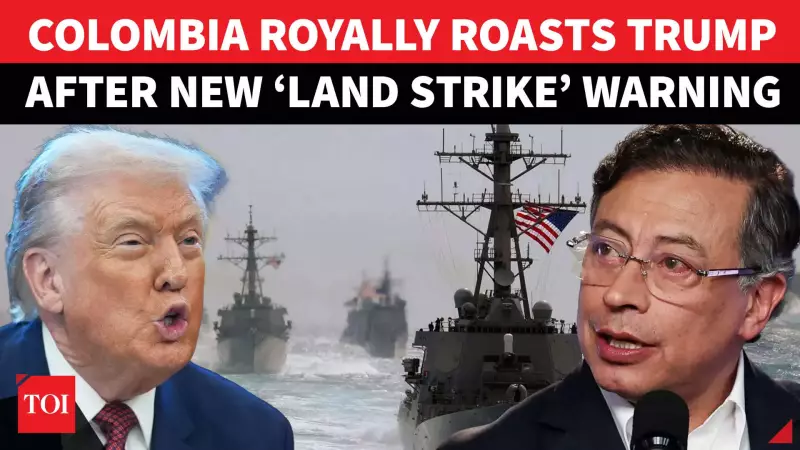
Colombian President Gustavo Petro has delivered a sharp rebuke to former US President Donald Trump, following Trump's recent threats of potential military action against nations involved in drug production and trafficking. The fiery response came on December 4, 2025, during a public address in the Catatumbo region.
A Warning Against "Return to Barbarism"
Speaking at the inauguration of the new El Tarra School-University, President Petro condemned what he labelled a dangerous "return to barbarism." He was directly responding to Trump's rhetoric, which hinted at missile strikes and ground operations in Latin American countries, including Colombia, as part of a hardline approach to stop the flow of narcotics into the United States.
Petro argued that global politics cannot and should not be driven by threats and the use of force. Instead of escalating tensions with military posturing, he strongly advocated for a return to diplomatic dialogue as the only viable path forward. His message underscored a fundamental clash in approaches to international relations and the decades-long war on drugs.

Direct Appeal to ELN Guerrillas Amid Pressure
In a significant move during the same speech, President Petro turned his attention to Colombia's National Liberation Army (ELN), an active guerrilla group. Addressing them as "brothers and sisters," he urged them to seize the current moment for peace.
Analysts see this plea as a strategic call made against the backdrop of rising foreign pressure, exemplified by Trump's threats. Petro's administration has been engaged in stop-start peace talks with the ELN, and the president's public message appears to be an effort to accelerate negotiations while highlighting the increased stakes.
Regional Implications of Trump's Stance
The exchange marks a significant flare-up in relations between Colombia and the United States, traditionally close allies. Trump's threat, while not unprecedented in his political rhetoric, has been taken seriously by the Colombian government, prompting a high-level diplomatic response.
Petro's condemnation reflects broader concerns in Latin America about sovereignty and the use of unilateral force by powerful nations. The incident sets a tense precedent for bilateral relations should Trump return to power, potentially affecting cooperation on security, trade, and regional stability. The focus now shifts to whether this war of words escalates further or leads to a renewed, but cautious, diplomatic engagement.