Portugal's Presidential Runoff: Socialist Seguro Heavily Favored to Defeat Populist Ventura
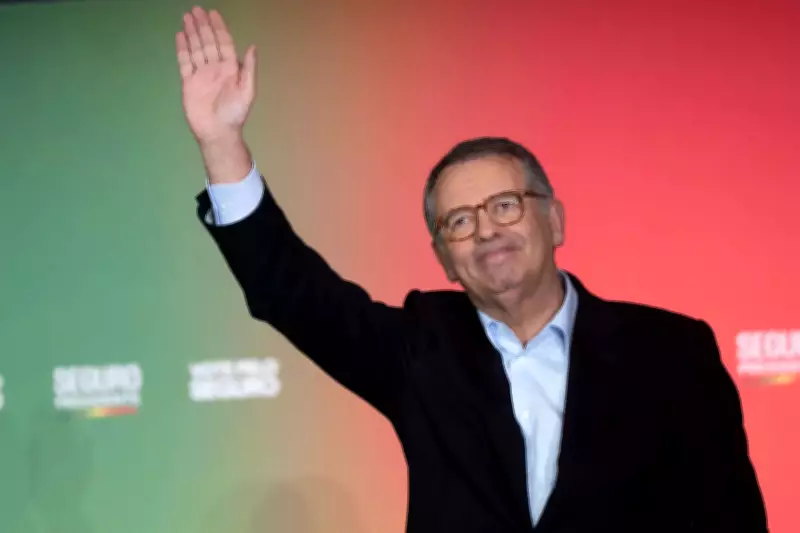
In a critical test for Portugal's political landscape, center-left Socialist candidate Antonio Jose Seguro is overwhelmingly favored to defeat hard-right populist Andre Ventura in Sunday's presidential runoff election. This high-stakes vote will measure the depth of public support for Ventura's brash, anti-establishment style of politics, which has rapidly gained traction amid a broader European shift to the right.
Polling Predicts Decisive Victory for Seguro
Recent opinion polls indicate that Seguro is projected to collect approximately twice as many votes as Ventura in this head-to-head contest. The runoff was necessitated after last month's first round of voting, where none of the candidates managed to secure the required majority of more than 50% of the vote. However, merely advancing to the runoff represents a significant milestone for Ventura and his Chega (Enough) party, which has swiftly evolved into a formidable political force in Portugal.
Contrasting Campaigns and Political Styles
Antonio Jose Seguro, a seasoned Socialist politician, has strategically positioned himself as a moderate, consensus-building candidate. He has pledged to cooperate constructively with Portugal's current center-right minority government, explicitly repudiating Ventura's frequent anti-establishment rhetoric and vehement anti-immigrant tirades. In contrast, Andre Ventura has embraced a combative and theatrical political style, rejecting traditional political accommodation.

The President's Role and Powers in Portuguese Politics
While the Portuguese president is largely a ceremonial figurehead without direct executive power, the office holds substantial influence. Traditionally, the head of state operates above daily political conflicts, serving as a mediator in disputes and a stabilizer during tensions. Nevertheless, the president wields several powerful constitutional tools:
- The authority to veto legislation passed by parliament, although such vetoes can be overridden.
- The so-called "atomic bomb" power in Portuguese political jargon: the ability to dissolve parliament and call for early elections.
This role is particularly crucial given Portugal's recent political instability. The country experienced its third general election in just three years this past May, marking the worst period of governmental uncertainty in decades. Consequently, steadying the political ship and fostering stability is a paramount challenge for the incoming president.
Rise of the Chega Party and Political Context
Andre Ventura founded the Chega party less than seven years ago, yet its surge in public support has been dramatic. In the May 18 general election, Chega became the second-largest party in Portugal's parliament, reflecting its rapid ascent. The upcoming presidential election in March will see the winner replace the outgoing center-right President Marcelo Rebelo de Sousa, who has completed the constitutional limit of two five-year terms.
This runoff not only decides Portugal's next head of state but also serves as a referendum on the nation's political direction—whether it will embrace Seguro's moderate, cooperative approach or Ventura's populist, confrontational stance amid Europe's evolving political dynamics.