Fed Chair Powell Foresees Tariff-Induced Inflation Spike in 2026, Maintains Steady Rate Stance
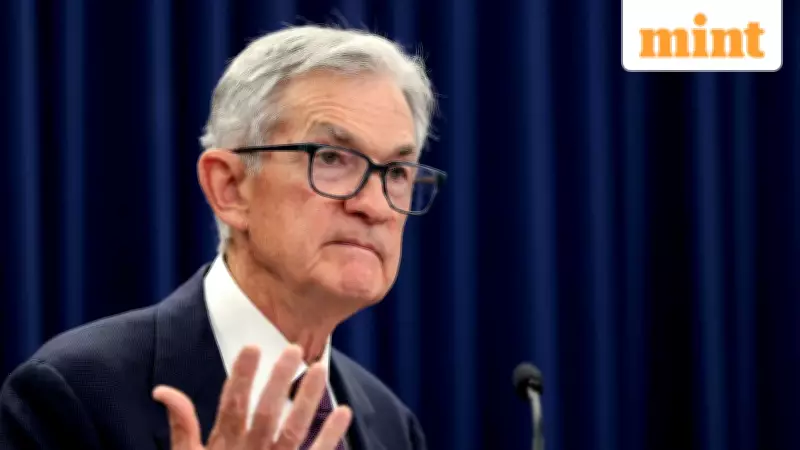
In a significant media briefing following the Federal Reserve's latest policy announcement, Chair Jerome Powell outlined expectations for a temporary inflationary surge linked to government tariffs, while firmly dismissing prospects for near-term rate hikes.
Tariff Impact Timeline and Inflation Projections
Jerome Powell specifically pinpointed the middle quarters of 2026 as the anticipated period when tariff-related inflation would reach its peak. "There's an expectation that sometime in the middle quarters of the year we'll see tariff inflation topping out," Powell stated during his post-meeting press conference.
The Fed Chair attributed this projected price increase directly to higher tariffs imposed by the Donald Trump administration, which would elevate goods prices. However, Powell emphasized that this inflationary effect would be transitory rather than persistent, with tariffs not expected to maintain elevated inflation levels over the long term.

Current Inflation Landscape and Policy Assessment
Powell's comments come against a backdrop of moderating but still elevated inflation metrics. The US Personal Consumption Expenditures Index revealed core inflation at 2.8% year-over-year for both October and November. While inflation has declined throughout 2025, it remains above the Federal Reserve's established 2% long-run target.
Despite this, Powell characterized inflation risks as "diminished" and described current monetary policy as being in a "good place." This assessment reflects the Fed's balanced approach to its dual mandate of maximum employment and price stability.
Interest Rate Outlook and Committee Consensus
The Federal Reserve Chair explicitly ruled out imminent rate increases, stating, "It isn't anybody's base case right now that the next move will be a rate hike." This position was reinforced by the Fed's decision to maintain steady interest rates on January 28, despite external pressure for tightening from the Trump administration.
Powell indicated that while the Fed continues monitoring risks to both employment and inflation objectives, current signals point toward rate cuts being more probable than hikes in the future policy trajectory. However, he clarified that neither adjustment appears imminent based on current economic conditions.
Federal Open Market Committee Dynamics
The January meeting revealed substantial agreement among policymakers regarding the maintenance of current interest rates. Powell noted "broad support on the committee for holding today," though two dissenting votes were recorded from Fed governors Stephen Miran and Chris Waller.
Reflecting on the committee's deliberations, Powell shared insights into the nuanced perspectives among Fed officials: "Many of my colleagues think it's hard to look at the incoming data and say that policy is significantly restrictive at this time. It may be sort of loosely neutral, or it may be somewhat restrictive. You know, it's in the eye of the beholder, and of course, no one knows with any precision."
This statement underscores the complex interpretive challenges facing monetary policymakers as they navigate uncertain economic terrain while maintaining their commitment to data-dependent decision-making.