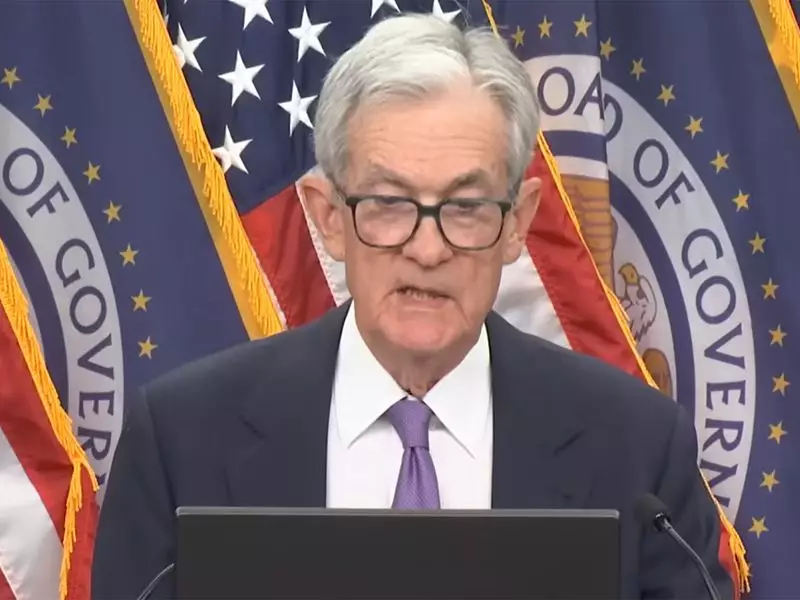
In a firm defence of institutional autonomy, Federal Reserve Chair Jerome Powell has described a reported investigation by the US Justice Department into media leaks from the central bank as an "unprecedented" event. Powell strongly reaffirmed the Fed's commitment to making monetary policy decisions free from political interference.
Powell's Strong Rebuttal to Reported Probe
The comments from the world's most powerful central banker came during a press conference following the Federal Open Market Committee (FOMC) meeting. Powell was responding to questions about a recent report from Bloomberg News. The report suggested that the Justice Department had launched an investigation into whether Fed officials had improperly disclosed market-sensitive information to journalists.
Jerome Powell stated clearly that he had never experienced such an investigation in his long tenure at the Federal Reserve. He emphasised that the central bank has its own robust set of rules and procedures, including strict confidentiality protocols, which all officials are required to follow. His remarks underscored a clear boundary between the operational independence of the Fed and external investigations.

Commitment to Policy Independence Amidst Scrutiny
At the heart of Powell's message was a powerful reaffirmation of the Federal Reserve's policy independence. This principle is considered sacrosanct in central banking globally, ensuring that decisions on interest rates and monetary policy are made based on economic data and analysis, not short-term political pressures.
"We do our work in an open and transparent way, but we also have rules about how we do it and about confidentiality," Powell explained. He pointed out that the Fed has its own mechanisms to handle any internal issues concerning conduct or confidentiality breaches. The implied message was that the institution is fully capable of self-governance in these matters.
The context of this statement is crucial. The Federal Reserve is currently navigating a highly complex economic environment, wrestling with persistent inflation while aiming to avoid triggering a recession. Any perception of political influence or external pressure could undermine market confidence in its decisions. Powell's forceful defence serves to insulate the Fed's policymaking process from such concerns.
Implications for Institutional Trust and Market Stability
The unprecedented nature of the reported DOJ action, as framed by Powell, raises significant questions about the relationship between the central bank and the executive branch. Historically, the Fed's independence has been a cornerstone of its credibility with financial markets and the international community.
Analysts suggest that Powell's public stance serves multiple purposes. Primarily, it acts as a shield for the institution and its staff, affirming that their work should not be subject to external criminal probes for alleged process lapses. Secondly, it reassures investors that the Fed's future policy moves—whether continuing a pause on rate hikes or resuming them—will be based solely on economic indicators.
The Fed Chair made it clear that the central bank would cooperate with the Justice Department if formally approached, but his initial comments set a firm tone. This episode highlights the delicate balance independent institutions must maintain while operating within a broader governmental framework, especially in an election year in the United States.
For global markets and observers in India, Powell's strong defence of the Fed's autonomy is a positive signal. It suggests that the primary driver of US monetary policy, which has profound effects on global capital flows, currency exchange rates, and emerging market economies, will remain data-dependent and insulated from political winds, at least for the foreseeable future.