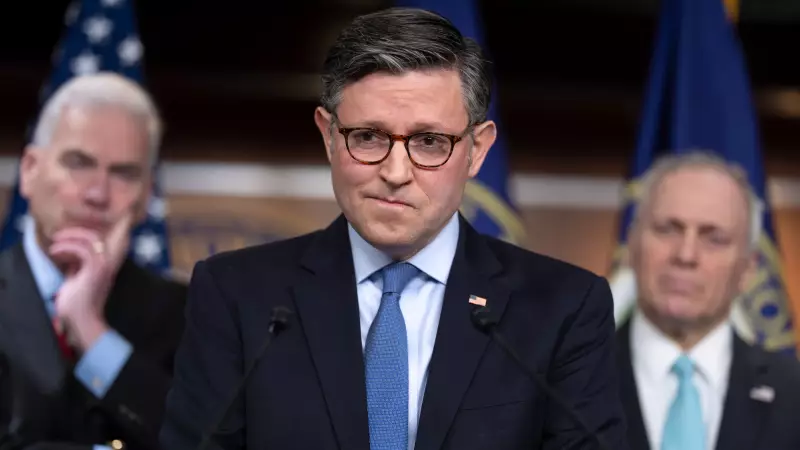
In a significant political development that underscores the ongoing debate over healthcare in the United States, a group of House Republicans has taken the extraordinary step of joining forces with Democrats. Their collective action aims to compel a floor vote on a critical measure: the extension of subsidies for the Affordable Care Act (ACA), commonly known as Obamacare. This move directly challenges the authority of the current Republican House Speaker, Mike Johnson.
A Rare Bipartisan Coalition Emerges
The mechanism being used to advance this legislation is a parliamentary tool known as a discharge petition. For such a petition to succeed and force a bill out of committee and onto the House floor for a vote, it requires the signatures of a majority of House members, which translates to 218 votes. The current effort, led by Democratic Representative Abigail Spanberger of Virginia, has seen a notable breakthrough. Several Republican members have broken ranks with their party leadership to add their names to the petition.
This rare show of cross-aisle cooperation highlights the enduring political sensitivity surrounding healthcare access and costs, particularly for middle-class families. The subsidies in question help lower the cost of health insurance premiums for millions of Americans who purchase coverage through the ACA marketplaces. Their potential expiration poses a direct financial threat to these enrollees, creating pressure on lawmakers from both parties in competitive districts.

Defying Speaker Johnson's Leadership
The decision by these Republicans to support the discharge petition represents a direct defiance of Speaker Mike Johnson's control over the House agenda. Traditionally, the Speaker holds significant power in deciding which bills come up for a vote. By rallying enough support to potentially bypass this gatekeeping authority, the bipartisan coalition is testing the limits of party discipline.
This internal Republican rift comes at a politically delicate time. With control of the House hanging in the balance in the upcoming elections, healthcare remains a potent issue for voters. The lawmakers supporting the petition appear to be calculating that securing an extension of popular healthcare subsidies is more critical than adhering strictly to party lines. Their action signals that on certain issues, especially those with direct consumer impact, bipartisan compromise can still emerge, even in a deeply polarized Congress.
Implications for US Healthcare Policy and Politics
The success of the discharge petition is not yet guaranteed. The organizers must still gather the full 218 signatures. However, the mere fact that it has gained Republican support changes the political dynamics. It forces the leadership to acknowledge the substantial backing for the subsidy extension and increases the public pressure on them to allow a vote.
If the petition succeeds and the bill comes to the floor, it is widely expected to pass with strong bipartisan support, given the number of Republicans already on record. This would represent a major victory for proponents of the Affordable Care Act and ensure the stability of the health insurance marketplaces for the near future. The episode demonstrates how procedural tools can be used to circumvent legislative gridlock. Furthermore, it showcases the evolving political landscape where traditional party allegiances can be secondary to district-level concerns about key issues like healthcare affordability.
The final outcome will be closely watched as a barometer of the Republican conference's unity under Speaker Johnson and as a case study in how bipartisan majorities can still form on specific, high-stakes policies. The move underscores the enduring legacy of the Obamacare law and the practical challenges of rolling back its benefits, even in a chamber controlled by its historical opponents.