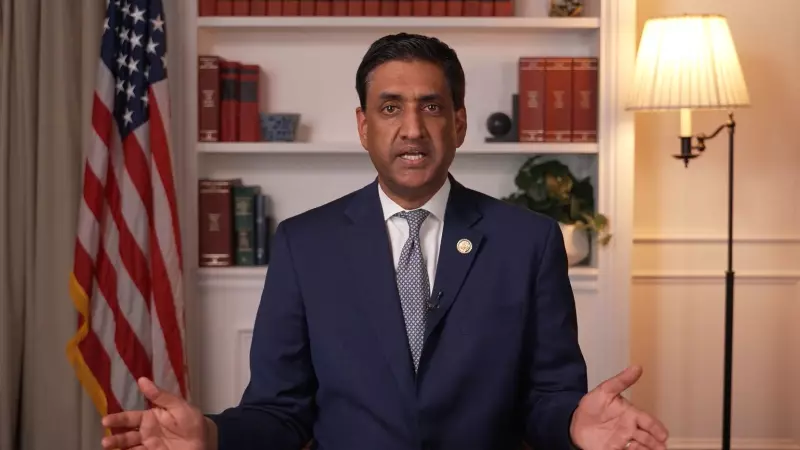
In a significant move demanding greater transparency, Indian-American Congressman Ro Khanna has formally challenged the United States Department of Justice (DOJ) over its handling of sealed court documents related to the late financier and convicted sex offender, Jeffrey Epstein.
The Congressional Challenge for Transparency
Representative Ro Khanna, a Democrat from California, has taken a firm stand by sending a detailed letter to Attorney General Merrick Garland. The core of his demand revolves around the public release of documents that remain under seal from a 2017 civil defamation lawsuit involving Ghislaine Maxwell, Epstein's former associate. Khanna argues that the continued secrecy undermines the public's right to know and hampers a full understanding of the extent of Epstein's network.
The congressman's intervention comes amidst ongoing public and media scrutiny following the release of a first batch of documents in early January 2024. While those initial filings revealed numerous names, including associates and victims, many more records are still withheld from public view. Khanna's letter emphasizes that the DOJ possesses the authority to petition the court for the unsealing of these materials, a step he insists must be taken to serve justice and public interest.

Key Arguments and Legal Framework
In his communication to the top US law enforcement official, Khanna meticulously outlines the legal and moral imperatives for disclosure. He references the Crime Victims' Rights Act, asserting that victims and the general public have a legitimate right to access information about the crimes committed. The sealed documents are believed to contain critical depositions, evidence, and names that could shed further light on the sprawling sex trafficking operation.
Khanna also pointedly questions the DOJ's apparent reluctance, asking why the department has not yet moved to make all non-privileged documents public. He stresses that transparency is paramount for ensuring accountability and preventing such abuse of power and wealth from happening again. The congressman's stance is not about partisan politics but about upholding the principle that in a democracy, justice must be seen to be done, especially in cases of such grave magnitude and public concern.
Broader Implications and Public Reaction
This action by Congressman Khanna amplifies the pressure on federal authorities to provide complete answers in one of the most infamous criminal cases of the modern era. The Epstein scandal, which involved the abuse of underage girls across multiple locations, including his private island and luxurious homes, has long been shrouded in allegations of a cover-up to protect powerful individuals.
The public and media appetite for the full story remains insatiable, with every new name revealed sparking global headlines and speculation. By leveraging his position in the House of Representatives, Khanna is channeling this public demand into formal congressional oversight. His move is seen as a direct attempt to ensure the DOJ uses all tools at its disposal to facilitate a comprehensive unveiling of the facts, potentially impacting powerful figures in business, politics, and academia whose names may still be concealed.
The ball is now in the court of Attorney General Merrick Garland and the Department of Justice. Their response to Congressman Khanna's challenge will be closely watched as a barometer of the Biden administration's commitment to transparency in this deeply troubling chapter. The outcome could determine whether the full truth behind Jeffrey Epstein's network is finally laid bare for the world to see.