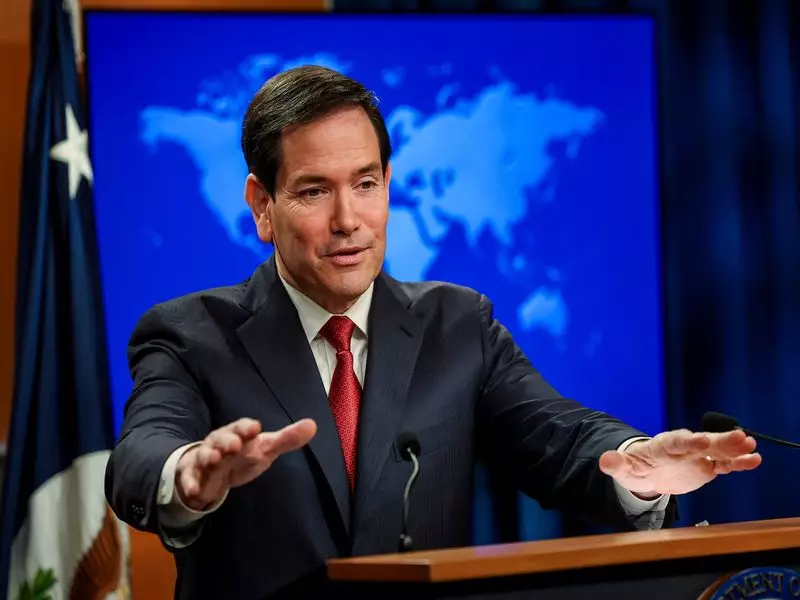
In a notable shift of rhetoric, prominent US Senator Marco Rubio has clarified his position regarding a potential return of former President Donald Trump to the White House and its implications for Venezuela. Rubio, a key Republican figure on foreign policy, emphasized that Trump "always retains optionality," walking back from his previous definitive stance against engaging with the Venezuelan government of Nicolás Maduro.
From Definite Stance to Strategic Ambiguity
Earlier, Senator Rubio had taken a firm public position, suggesting that a future Trump administration would not reverse the current US policy of sanctions and non-recognition towards the Maduro regime. This stance was seen as aligning with a hardline approach. However, in a recent interview, the Florida senator performed a clear reversal. He stated that his earlier comments were being misinterpreted and that he was not in a position to dictate the foreign policy of a potential future Trump presidency.
The core of Rubio's new position hinges on the concept of "optionality." He argued that President Trump, during his first term and in any potential second term, maintains the flexibility to change strategies based on circumstances. "He always retains optionality to do a variety of things," Rubio said, indicating that all policy tools, including diplomatic engagement, remain on the table.

Context of US-Venezuela Relations
This clarification comes amidst a complex geopolitical landscape concerning Venezuela. The United States, along with many other nations, recognized opposition leader Juan Guaidó as the legitimate interim president in 2019, following elections widely condemned as fraudulent. The Biden administration has continued a policy of sanctions while also engaging in limited negotiations, resulting in a temporary agreement for a monitored presidential election in 2024.
Rubio's initial comments had raised eyebrows, as they seemed to preemptively box in a future administration's choices. His correction underscores the unpredictable nature of Trump's foreign policy approach, which often favored personal diplomacy and sudden shifts over ideological consistency. The senator's revised statement leaves the door open for a potential Trump negotiation with Caracas, a move that could significantly alter the regional dynamic.
Implications and Political Reactions
The U-turn has sparked discussions among analysts and political circles. Some view it as a pragmatic acknowledgment of Trump's autonomous decision-making style, while others see it as an attempt to avoid alienating the former president or his base ahead of crucial elections. For the Venezuelan opposition and the Maduro government, the message is one of continued uncertainty. The prospect of a renewed Trump term no longer guarantees a continuation of the maximum pressure campaign, introducing a new variable into their strategic calculations.
This episode highlights the fluidity of political positions in the context of a highly charged US election cycle. It also reaffirms that on contentious foreign policy issues like Venezuela, definitive statements are often replaced by strategic ambiguity, especially when aligned with a figure known for his transactional and unpredictable approach to international deals. The world, and particularly nations like Venezuela in the crosshairs of US policy, will be watching closely to see how this "optionality" might manifest if political fortunes change in Washington.