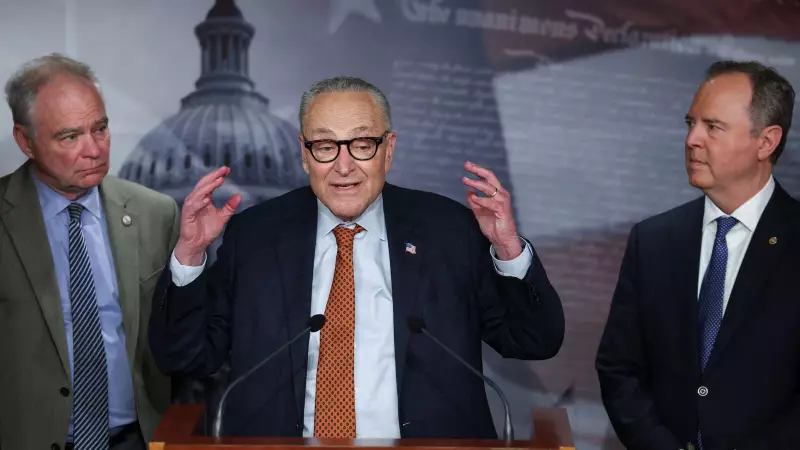
In a significant bipartisan move, the United States Senate has advanced a resolution aimed at curbing President Donald Trump's ability to initiate further military action in Venezuela without explicit congressional approval. The vote, held on Thursday, January 8, 2026, saw a notable crossing of party lines.
Key Details of the Senate Vote and Resolution
The war powers resolution passed with a final tally of 52 votes in favour to 47 against. While all Democratic senators supported the measure, the crucial margin came from five Republican senators who sided with the opposition. This provided the necessary votes to advance the bill, which is scheduled for a final passage vote next week.
This legislative action comes just days after the dramatic capture of Venezuelan President Nicolas Maduro and his wife in a US military raid in Caracas. The resolution is the latest in a series of congressional efforts to check executive war powers, following the administration's escalation of military pressure on Venezuela, including attacks on boats off its coast in September 2025.

Despite the symbolic victory for its backers, the bill's path to becoming law is effectively blocked. For it to be enacted, President Trump would need to sign it himself, an unlikely scenario given his administration's stance. The resolution, therefore, stands as a powerful political statement rather than imminent policy.
Growing Republican Unease Over Military Strategy
The vote highlights a palpable sense of disquiet within the Republican Party regarding Trump's military adventurism. This is particularly significant given that the GOP controls both the Senate and the House of Representatives. The defection of five senators points to deeper concerns about the administration's long-term strategy and transparency.
This is not the first time such a resolution has gained traction. In November 2025, a similar measure failed by a narrow margin of 49-51, after two Republican senators supported it. At that time, the administration assured lawmakers it had no plans to topple the Venezuelan government or conduct strikes on its mainland.
However, the recent capture of Maduro has led to renewed accusations, both publicly from Democrats and privately from some Republicans, that the administration may have misled Congress about its intentions. Some lawmakers now express fear that the president's next target could be a controversial move to acquire Greenland from Denmark.
Voices from the Senate Floor
Leading voices from both parties championed the resolution. Senator Rand Paul, a Republican from Kentucky who co-sponsored the bill, revealed shifting sentiments within his party ahead of the vote. "I spoke to at least two Republicans today who did not vote for this resolution previously who are thinking about it," Paul stated at a press conference.
He was joined by Democratic Senator Tim Kaine of Virginia, another key leader behind the resolution. Paul added, "I can't guarantee you how they vote, but at least two are thinking about it, and some of them are talking publicly about their misgivings over this." Their joint appearance underscored the unusual bipartisan alliance formed around this issue of congressional authority versus executive power.
The passage of this war powers bill, even with its limited immediate legal impact, sends a strong message from Capitol Hill. It reflects a growing bipartisan insistence on congressional oversight in matters of war and peace, setting a notable precedent during President Trump's tenure.