

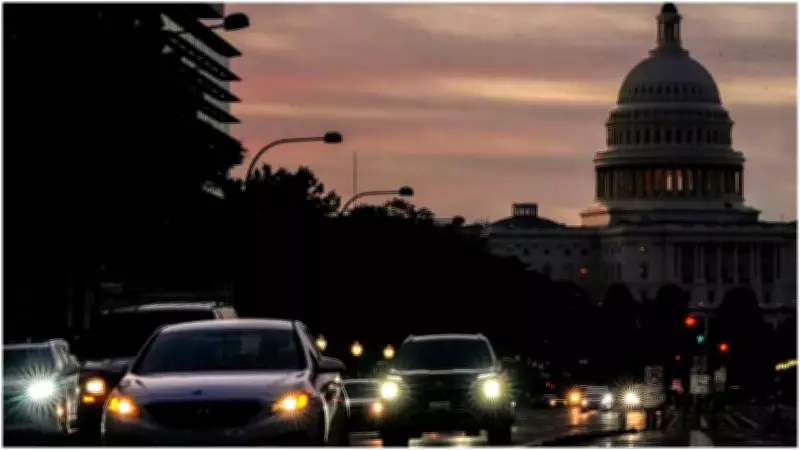
In a significant legislative move, the United States Senate passed a compromise spending package on Friday with a decisive 71-29 vote. This action establishes a pathway for Congress to prevent an extended government shutdown, though a partial shutdown remains imminent due to timing constraints.
Bipartisan Agreement and Voting Breakdown
The Senate's approval followed a deal struck between Senate Democrats and President Donald Trump, which attached two weeks of Homeland Security funding to five separate spending bills. These bills will fund critical agencies including the Pentagon and the State Department through September 30.
Republican support was notably strong, with only five out of 53 GOP senators voting against the package after President Trump publicly urged lawmakers to approve the legislation. Democrats were more divided, with 24 of the 47 caucus members opposing the measure.

Immediate Challenges and House Hurdles
Despite the Senate's action, a partial government shutdown is set to begin early Saturday morning. This is because House lawmakers are currently out of town and not scheduled to return until Monday. During a private call with House Republicans, Speaker Mike Johnson indicated that the most likely route for House passage would involve a fast-track process on Monday evening, requiring a two-thirds majority and substantial Democratic support.
The Rs 99.6 lakh crore package could encounter significant resistance in the House. Conservative hard-liners have already stated they will vote against any Senate modifications to the legislation previously passed by the House. Additionally, many House Democrats express concerns about the stopgap funding for the Department of Homeland Security, which maintains current funding levels for Immigration and Customs Enforcement and Border Patrol without implementing new restrictions.
Leadership Perspectives and Negotiation Dynamics
Senate Majority Leader John Thune revealed he has maintained constant communication with Speaker Johnson regarding the funding deal's passage through the House. Thune expressed optimism, stating, "Hopefully things go well over there," and predicted Johnson is "prepared to do everything he can as quickly as possible."
If the Trump-endorsed deal ultimately becomes law, Congress would have approved over 95 percent of federal funding, leaving only a full-year DHS bill as unfinished business. Several agencies, including the Departments of Agriculture, Veterans Affairs, and Justice, have already received funding through previous measures.
Democratic Victory and Ongoing Negotiations
The Republican agreement to replace the full-year DHS bill with a two-week patch represents a major victory for Democrats. This development followed unified Democratic demands to separate and renegotiate immigration enforcement funding after federal agents fatally shot 37-year-old U.S. citizen Alex Pretti in Minnesota last week.
Senate Minority Leader Chuck Schumer, who played a key role in negotiating the final deal, celebrated the outcome, declaring, "the agreement we reached today did exactly what Democrats wanted." However, Democrats must still negotiate with the White House and congressional Republicans regarding potential policy changes to be included in a long-term bill.
Republicans have shown openness to certain modifications, such as requiring independent investigations, but have already rejected some of Democrats' primary demands, including mandating judicial warrants for immigration arrests.
Fiscal Responsibility and Operational Impact
Senate Appropriations Committee Chair Susan Collins emphasized the bipartisan effort behind the legislation, stating, "These are fiscally responsible bills that reflect months of hard work and deliberation from members on both parties and both sides of the Capitol."
The Office of Management and Budget has issued shutdown guidance for agencies not yet funded, which includes furloughs for some personnel. This underscores the urgent need for congressional action to maintain government operations and avoid further disruptions.






