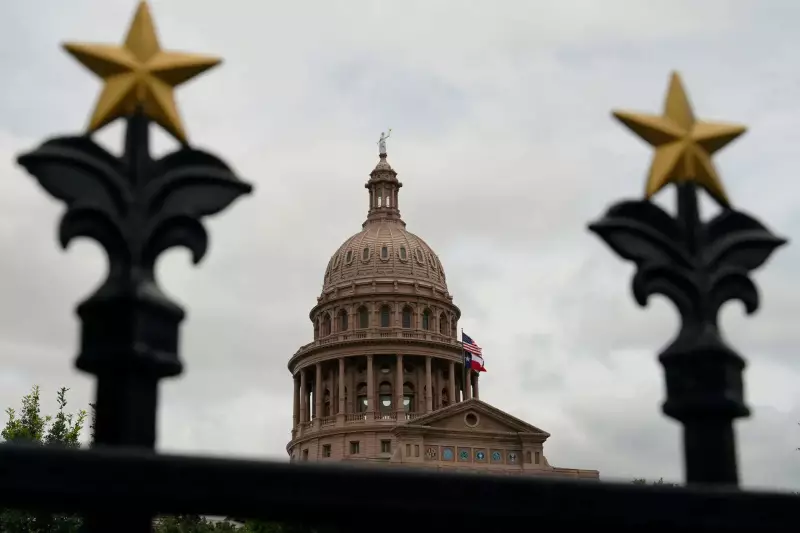
In a significant development for American electoral politics, the United States Supreme Court has given Texas the green light to implement its newly drawn congressional district map. This decision, delivered on Thursday, is expected to substantially improve the Republican Party's prospects of securing up to five additional seats in the US House of Representatives during the crucial 2026 midterm elections.
A Legal Battle Over Race and Representation
The Supreme Court's unsigned order granted an emergency request from the state of Texas. This action effectively pauses a ruling from a lower court—a three-judge panel—that had previously blocked the use of the new map. The lower court's decision came after allegations that the redistricting plan amounted to racial discrimination against voters.
The legal challenge against the map gained traction following a detailed nine-day hearing held in October. The three-judge panel, which included a judge appointed by former President Donald Trump, concluded that the plaintiffs were likely to succeed in proving that the map violated the US Constitution. Their opinion pointed to evidence suggesting state lawmakers deliberately manipulated racial demographics to dismantle districts where Black and Latino voters constituted a majority.

Citing a letter from the Department of Justice and public statements by key Republican legislators, the panel ordered Texas to revert to the congressional districts established in 2021 for the upcoming elections. Texas, however, appealed to the highest court, arguing that its lawmakers were driven primarily by partisan goals—favoring Republicans—rather than racial motives.
National Redistricting Landscape Remains in Flux
This ruling is not an isolated event but part of a broader, unsettled national picture regarding electoral boundaries. The decision in Texas prompted a counter-move in California, where voters recently approved a new congressional map that could aid Democrats in gaining approximately five House seats. A court hearing on the legal challenges to California's map is scheduled for December 15.
Meanwhile, similar battles are unfolding across the country. Lawsuits are challenging new district lines in Missouri, and states like Florida, Indiana, and Virginia may also pursue fresh maps before the midterm elections. Adding to the complexity, a federal court recently ruled that North Carolina's midterm elections can proceed under a recently redrawn map that may hand Republicans an extra seat.
Another wave of congressional redistricting could be triggered by a pending Supreme Court ruling in a pivotal voting rights case concerning Louisiana's map. After a rare rehearing in October, political observers are watching for a decision that could empower Republican-led states to adopt more favorable districts in time for the 2026 midterm polls.
Implications for Future Elections
The Supreme Court's intervention, initiated by a temporary order from Justice Samuel Alito in November, has immediate and long-term consequences. By allowing Texas to use its contested map, the court has influenced the balance of power in the US Congress even before the 2026 election cycle begins in earnest.
This ongoing tug-of-war over district boundaries underscores the intensely partisan nature of redistricting in the United States. The outcomes of these legal fights will fundamentally shape political representation, influence which communities have a voice in Washington, and determine the legislative agenda for years to come. The nation's eyes will remain fixed on the judiciary as it continues to navigate the complex intersection of law, politics, and race.