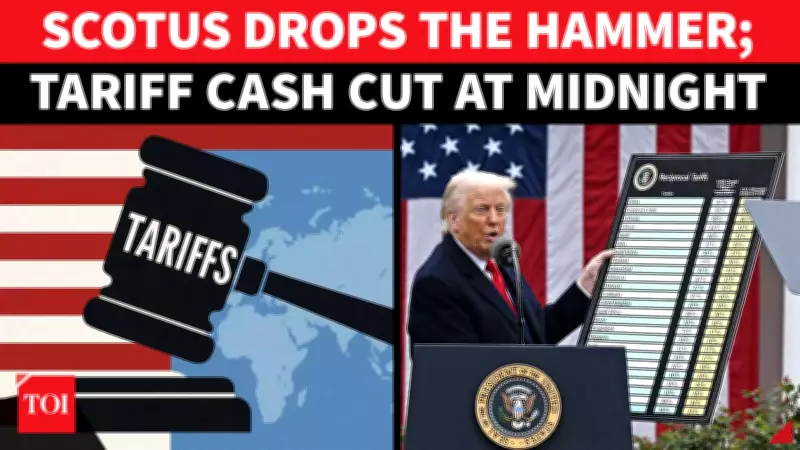
U.S. Supreme Court Overturns Trump Tariffs in Landmark 6-3 Decision
In a sweeping and consequential ruling, the Supreme Court of the United States has struck down tariffs imposed by former President Donald Trump, declaring that he exceeded his executive authority. The 6-3 decision, delivered on February 23, 2026, centers on the use of the 1977 International Emergency Economic Powers Act to implement broad tariffs, which the court found was an overreach of presidential power.
Immediate Halt to Tariff Collections and $175 Billion in Limbo
As a direct result of this ruling, U.S. Customs and Border Protection will cease collecting the affected duties effective at 12:01 a.m. This abrupt halt places more than $175 billion in tariff revenue in a state of uncertainty, with significant implications for federal finances and trade policies. Economists are raising alarms, warning that potential refunds for collected tariffs could trigger massive financial consequences, including disruptions to government budgeting and economic stability.
Trump's Swift Response with New 15 Percent Global Tariff
Within hours of the Supreme Court's decision, President Trump unveiled a new trade measure: a 15 percent global tariff implemented under Section 122 of the Trade Act of 1974. This move sets the stage for fresh legal battles, as critics and legal experts anticipate challenges to the legality of this new tariff. The administration's rapid pivot underscores the ongoing volatility in U.S. trade policy and the potential for continued judicial scrutiny.

Broader Implications for U.S. Trade and Economy
While the Supreme Court's ruling invalidates specific tariffs, it is important to note that other trade measures imposed by the Trump administration remain intact. This includes various bilateral agreements and targeted sanctions. The decision highlights the delicate balance between executive authority and congressional oversight in trade matters, with potential long-term effects on:
- International Trade Relations: The ruling may influence how future administrations use emergency powers in trade disputes.
- Economic Forecasting: The $175 billion at stake could impact economic projections and government revenue streams.
- Legal Precedents: This case sets a significant precedent for limiting presidential power under trade laws.
As the situation unfolds, stakeholders from businesses to policymakers are closely monitoring developments, with the potential for further legal actions and economic adjustments on the horizon. The Supreme Court's decision marks a pivotal moment in U.S. trade history, reshaping the landscape of tariff enforcement and executive authority.