Texas Republicans Intensify Scrutiny of Pakistani-Born Legislators
Two Texas state representatives born in Pakistan now face renewed criticism from prominent MAGA figures. This scrutiny follows recent allegations of H1-B visa fraud within the Red state. Texas holds significant importance for the Republican Party and remains a key stronghold for the Trump administration.
Who Are the Lawmakers in Question?
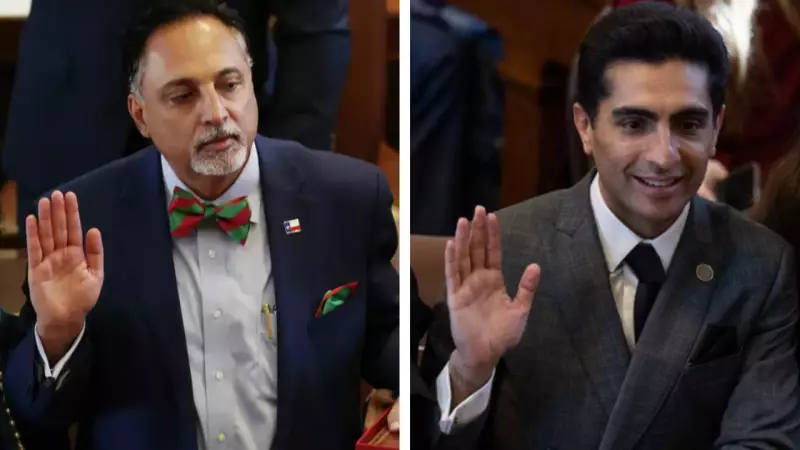
Suleman Lalani and Salman Bhojani both secured election to the Texas House of Representatives in 2022. Conservative activists argue these two men are systematically introducing legislation to incorporate Islamic norms into Texas law. They claim this process advances gradually without resorting to violence.
The allegations gained traction through a 2025 article by 'America First' commentator Amy Mek. Mek serves as the founder and editor-in-chief of the RAIR Foundation. She asserted that Texas functions as a testing ground for what she termed "civilizational jihad."

"This is how a state gets Islamized," Mek wrote in her piece. "It's incremental Islamization through legislation." Both Lalani and Bhojani, who are Muslim, chose to swear their oaths of office on the Quran.
Which Specific Bills Have Sparked Controversy?
The current dispute centers on numerous bills and House resolutions introduced or supported by the two lawmakers during the 2025 legislative session. These proposals include:
- Resolutions officially recognizing Ramadan and Eid.
- Measures to prevent schools from scheduling exams on Islamic holidays.
- Provisions for dietary accommodations.
- Bills mandating that public schools offer halal food options.
One particular bill, HB 1044, introduced by Bhojani, authorizes Muslim imams to conduct marriage ceremonies under Texas law. Mek and other conservative activists contend this legislation could enable religious rules to operate alongside existing Texas family law.
"This isn't inclusion," Mek claimed. "It's a gateway to parallel family law systems."
Additional Legislation Draws Fire
Another legislative effort aimed to counter "Islamophobia." HCR 85 would establish a "Day to Combat Islamophobia" in Texas through the year 2035. Mek argued this resolution would effectively silence any criticism of Islamic ideology.
"This is how blasphemy laws begin," Mek wrote. "First a day. Then policy. Then punishment."
Bhojani has publicly thanked the Council on American-Islamic Relations, known as CAIR. Amy Mek links this organization to the Muslim Brotherhood. She references CAIR's executive director, Nihad Awad, who previously commented on the October 7 Hamas attacks on Israel. Awad stated, "Yes, I was happy to see people breaking the siege."
Comparisons to Pakistan's Legal System
Mek's article carries the provocative title "Texas Alert: Two Islamic Lawmakers Are Leading the Pakistanification of the Lone Star State." It draws direct comparisons between the lawmakers' actions and Pakistan's legal evolution, where Islam holds constitutional status.
Pakistan was established in 1947 with a substantial non-Muslim population. Today, non-Muslims constitute less than three percent of its population. The country enforces blasphemy laws that carry the death penalty. Documented cases exist of forced conversions and mob violence.
"This is exactly how Pakistan came to be," Mek wrote. "Texas is not Pakistan. Yet."