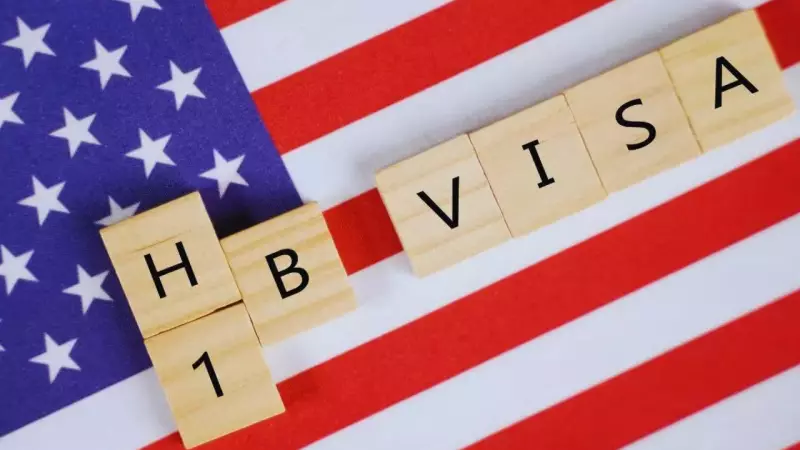
The recent executive order by Texas Governor Greg Abbott imposing a freeze on new H-1B visa petitions for state agencies and public universities has sparked significant discussion, particularly regarding its implications for Indian professionals. While India is a major recipient of H-1B visas, the impact of this freeze is expected to be minimal for Indians, as it largely excludes the IT sector where most Indian H-1B holders are concentrated.
Scope of the H-1B Freeze in Texas
Governor Abbott's directive, effective until May 2027, mandates that all Texas state agencies and public universities halt new H-1B visa petitions unless they obtain permission from the Texas Workforce Commission. This freeze is specifically targeted at entities under the governor's jurisdiction and does not affect Texas school districts, cities, counties, or local governments.
Agencies and Institutions Affected by the Freeze
The freeze applies to a range of key state bodies and educational institutions, including:

- Texas Department of Transportation
- Texas Health and Human Services
- Texas Department of Public Safety
- Texas Workforce Commission
- University of Texas system institutions, such as the University of Texas at Austin, UT Southwestern Medical Center, and UT MD Anderson Cancer Center
- Texas A&M University System campuses, including Texas A&M University-College Station and associated research agencies
- Texas Tech University and its associated campuses
Limited Impact on Indian H-1B Professionals
Despite India being one of the top recipients of H-1B visas, the concentration of Indian professionals is predominantly in the IT industry, which remains unaffected by this freeze. There is no precise data on the number of H-1B Indians employed in Texas state departments or universities, but estimates suggest it is significantly lower than the number working in IT roles.
Concerns Over Skilled Labor Shortages
US immigration lawyer Emily Neumann has voiced concerns about the potential consequences of the freeze. She described it as "shooting ourselves in the foot," highlighting that universities may face shortages of skilled professors and researchers. With no clear roadmap for filling these positions and a lack of Americans ready to take on these roles, Texas state universities and teaching hospitals could experience significant gaps in their academic and medical staff.
Mixed Reactions from Indian-American Community
The freeze has elicited varied responses within the Indian-American community. Sidharth, co-founder of the Indian-American Advocacy Council, welcomed the move, suggesting that a one-year pause on new H-1B filings could lead to greater transparency. He argued that this period would allow for an audit to expose fraudulent practices and misrepresentations in the H-1B system, ultimately promoting a more honest labor market.
As the situation unfolds, the long-term effects of this policy on Texas's public sector and its relationship with international talent, particularly from India, will become clearer. For now, the exclusion of the IT industry means that the majority of Indian H-1B professionals in Texas may continue their work without immediate disruption.