US Congressman Shri Thanedar Confronts Racist Backlash Over ICE Bill
Democratic Congressman Shri Thanedar has taken a firm stand against racist comments directed at him and other Indian-origin lawmakers. This backlash emerged after Thanedar introduced a controversial proposal to abolish the Immigration and Customs Enforcement agency.
Racist Social Media Attack Targets Indian-American Lawmakers
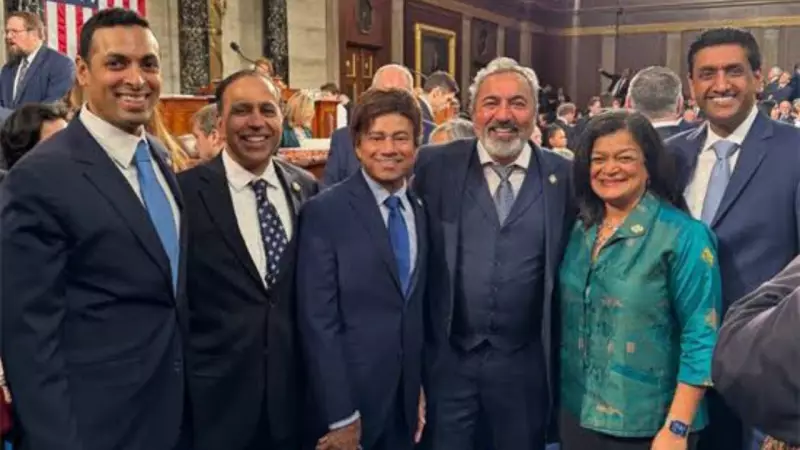
A social media user posted a vile comment targeting six Indian-origin Congressmen. The post included a photo of Representatives Suhas Subramanyam, Ami Bera, Shri Thanedar, Raja Krishnamoorthi, Pramila Jayapal, and Ro Khanna. These lawmakers are often informally called the "Samosa Caucus" due to their shared Indian heritage.
The offensive comment stated, "My politics are tripling the size of ICE and getting these six on a one-way flight back to Mumbai." This racist attack came in response to Thanedar's legislative efforts to dismantle ICE.

Thanedar's Strong Response to Racist Remarks
Shri Thanedar did not remain silent in the face of these attacks. He directly addressed the racist comments on social media. Thanedar wrote, "Remember when MAGA claimed that they were only in favor of deporting people who were here 'illegally,' and that it had nothing to do with racism?"
This pointed response highlighted what Thanedar sees as the underlying racial motivations behind some immigration enforcement rhetoric. The Congressman has faced increased racist attacks since introducing his Abolish ICE Act.
The Abolish ICE Act Proposal Details
Congressman Thanedar recently introduced the Abolish ICE Act, a significant piece of legislation. This bill proposes to eliminate the Immigration and Customs Enforcement agency entirely. The legislation would end ICE's current enforcement authority effective 90 days after enactment.
The bill outlines a plan to reassign immigration-related duties to other federal agencies within the Department of Homeland Security. Thanedar argues that ICE's current structure inherently prioritizes aggressive enforcement and violence over due process and justice. He believes this fundamental flaw requires dismantling the agency rather than reforming it.
Personal Motivation Behind Thanedar's Anti-ICE Stance
Thanedar's strong anti-ICE position developed after a specific tragic incident. The shooting of 37-year-old Minneapolis woman Renee Good deeply affected him. Good was killed by ICE agent Jonathan Ross during an immigration raid.
The Donald Trump administration defended the ICE agent's actions, claiming he acted in self-defense when Renee Good's car moved toward him. Thanedar found this explanation unsatisfactory and it strengthened his resolve to challenge ICE's practices through legislation.
Thanedar Counters Mockery About His English
As Thanedar promoted his Abolish ICE Bill through multiple interviews, he faced additional personal attacks. Critics mocked his English language skills during these appearances. Thanedar addressed this mockery directly during one interview.
He discussed an incident where ICE agents teargassed a baby during an operation. The family was not even protesting at the time. When someone questioned why a baby was present at what they called a "riot," Thanedar responded sharply. He said, "MAGA evidently can't read. These are guys telling people to learn English."
This retort highlighted the hypocrisy Thanedar perceives in his critics. He pointed out that those mocking his English were themselves misreading or misunderstanding basic facts about immigration enforcement incidents.
Historical Context of Attacks on Indian-Origin Lawmakers
Racist attacks against Indian-origin Congressmen are not a new phenomenon. These lawmakers have faced various forms of discrimination and prejudice throughout their political careers. However, Thanedar's case represents a particularly public and aggressive wave of attacks.
The coordinated nature of the social media attack against the six Indian-American representatives suggests organized opposition to their policy positions. The racist language used specifically targets their ethnic background rather than engaging with their policy arguments.

Thanedar's response sets a precedent for how ethnic minority lawmakers might confront such attacks in the future. His direct engagement with racist comments contrasts with approaches that might ignore or downplay such incidents.
The situation continues to develop as Thanedar advances his legislative proposal while simultaneously defending himself and his colleagues from racially motivated attacks.