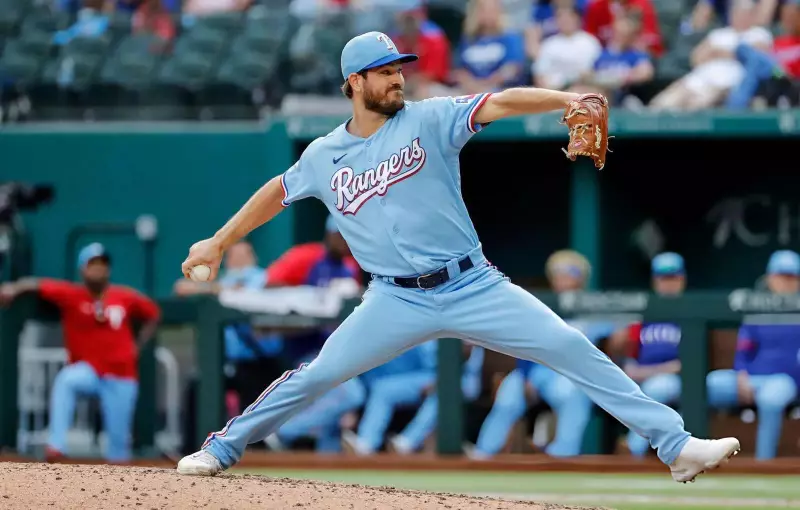
The Detroit Tigers have made their first notable move of the MLB offseason, securing right-handed pitcher Drew Anderson on a one-year contract. The deal, which includes a club option for the 2027 season, marks Anderson's return to Major League Baseball after a four-year absence, his last appearance being with the Chicago White Sox in 2021. The 31-year-old's signing is pending a physical, with financial terms remaining undisclosed, but it aligns with the Tigers' strategy of seeking affordable, low-risk additions to strengthen their squad.
Strategic Rotation Reinforcement for the Tigers
This acquisition is a calculated step by the Tigers' front office to add much-needed depth to their starting rotation. The team is coming off a surprising 2025 season where they won 86 games and clinched a Wild Card spot, their first playoff appearance since 2014. While ace Tarik Skubal led the charge with a league-best 2.39 ERA and 228 strikeouts, the sustainability of the overall pitching staff was a concern. The rotation behind Skubal featured Reese Olson (3.53 ERA), Casey Mize (3.76 ERA), and the mid-season acquisition Jack Flaherty (3.17 ERA).
With Skubal entering his final arbitration year before potential free agency after 2026, General Manager Scott Harris has emphasized the need for "multiple reliable starters." This move also provides a buffer as top prospect Jackson Jobe continues his recovery from Tommy John surgery. Anderson is viewed as a candidate to compete for a spot in this rotation, serving as insurance rather than a guaranteed savior.

Navigating a Tough Free Agent Market
The Tigers' pursuit of Anderson comes against the backdrop of an intensely competitive free-agent pitching market. The recent seven-year, $210 million extension signed by ace Dylan Cease with the Toronto Blue Jays has set a high financial bar, effectively pricing mid-market teams like Detroit out of the top-tier starter conversation. This reality has forced the Tigers to explore alternative and creative avenues for improvement.
According to reports from the Detroit Free Press on December 2, the team has also shown interest in other free agents like right-hander Michael King (3.08 ERA with Padres in 2025) for rotation support and closer Pete Fairbanks (2.48 ERA, 28 saves with Rays). Their search has included bullpen arms with starting potential, such as Brad Keller (2.95 ERA in relief for Cubs), and they made a push for reliever Ryan Helsley.
The KBO Success Story and Associated Risks
Drew Anderson represents a specific scouting path: tapping into international talent, particularly the Korea Baseball Organization (KBO), where he has been excelling recently. The Tigers are hoping he can follow the path of successful KBO returnees like Merrill Kelly, who turned a 3.01 ERA in Korea into a solid career with Arizona, and Erick Fedde, who parlayed a 2.37 KBO ERA into a 3.36 ERA with the White Sox in 2024.
However, the signing is not without its questions. Anderson's career in the minor leagues has been marked by control issues, with a walk rate of 4.2 BB/9, and he has yet to prove he can be a durable innings-eater at the MLB level. The Tigers' front office is fully aware of these caveats, treating the move as "depth insurance" in their larger plan to build a consistently competitive pitching staff.
The bullpen, which logged a heavy 1,478 1/3 innings last season, also requires reinforcement to prevent overuse early in the year. Anderson's signing is one piece of a complex puzzle as Detroit aims to accelerate its rebuild and transition from a promising team to a perennial contender. Whether he becomes the next overseas gem or simply serves as organizational depth, his journey adds an intriguing layer to the evolution of the Tigers' pitching philosophy.