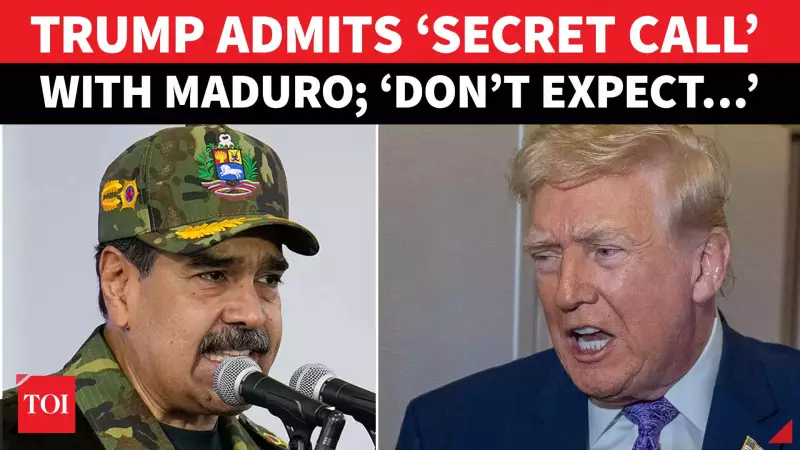
Former US President Donald Trump has broken his silence about the mysterious social media post that sent shockwaves through international diplomatic circles. In a significant revelation, Trump confirmed that he personally spoke with Venezuelan President Nicolás Maduro, though he remained tight-lipped about the details of their conversation.
The Mysterious Airspace Declaration
The confirmation comes days after Trump's cryptic message declaring Venezuelan airspace 'closed' sparked global speculation about potential military action. The December 1st social media post had immediately triggered concerns about escalating tensions between the United States and Venezuela, with many analysts interpreting it as a prelude to possible conflict.
However, Trump has now clarified that his airspace warning should not be overinterpreted. 'Not good or bad' was how the former president characterized his exchange with the Venezuelan leader, offering a deliberately vague assessment that leaves much to interpretation while confirming the unprecedented communication occurred.

Diplomatic Implications and Regional Impact
The admission marks a significant development in US-Venezuela relations, which have been strained for years. Maduro's government has faced international isolation and extensive sanctions from the United States and other Western nations. A direct conversation between Trump and Maduro, regardless of its content, represents a potential shift in diplomatic engagement.
The timing of this revelation is particularly crucial, coming amid ongoing political and economic crises in Venezuela and increasing geopolitical tensions in Latin America. Regional powers and international observers are closely monitoring these developments, aware that any change in US-Venezuela relations could have far-reaching consequences for the entire hemisphere.
Trump's approach to Venezuela has always been unpredictable, and this latest episode reinforces that pattern. By confirming the conversation while withholding substantive details, he has managed to both acknowledge the diplomatic contact and maintain an air of mystery about its true nature and purpose.
What This Means for Future Relations
The international community now faces several pressing questions. Was this a one-time communication, or does it signal the beginning of more sustained engagement between the two nations? How will other countries in the region, particularly those that have recognized opposition leader Juan Guaidó as Venezuela's legitimate president, respond to this development?
What remains clear is that Trump continues to operate outside conventional diplomatic channels, using social media to make significant international statements and engaging directly with leaders whom the US government has traditionally treated as pariahs. This approach has consistently characterized his foreign policy style, both during his presidency and in its aftermath.
As analysts scramble to understand the full implications of this confirmed conversation, one thing is certain: the geopolitical landscape of US-Venezuela relations has entered another unpredictable chapter, with Trump once again at the center of international attention and speculation.