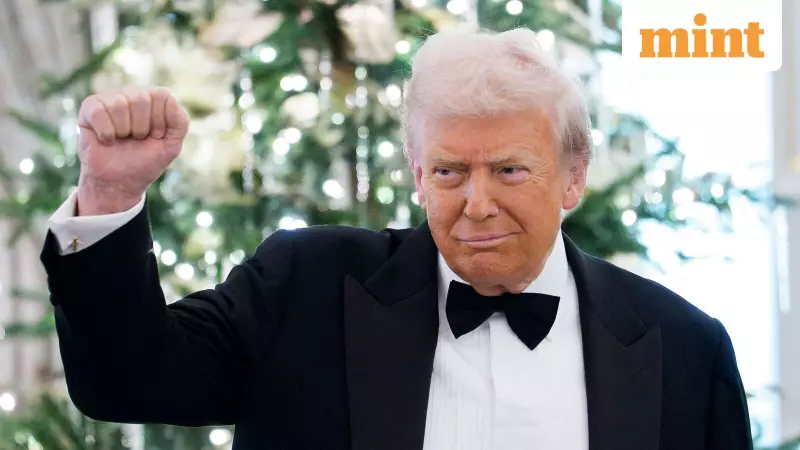
Senior advisors to US President Donald Trump are engaged in a concerted, behind-the-scenes campaign to redirect his focus towards the pressing issue of high prices and affordability, a concern they believe is eroding his political standing and jeopardising Republican prospects in upcoming elections.
Inside the White House Push
According to people familiar with the discussions, the effort involves almost every senior White House official. In a series of private meetings over recent weeks, aides have pressed the President to adjust his economic messaging. Just before Thanksgiving, top advisors met with Trump in his private dining room to discuss inflation and the economy.
In another session last month in the Oval Office, they presented him with surveys from his own pollster, detailing voters' deep worries about the cost of living. The team has even begun showing him social media posts that illustrate how ordinary Americans perceive the economic climate, urging him to emphasise what voters are genuinely feeling.

Trump's Resistance and the Democratic 'Con Job'
So far, President Trump has largely resisted adopting an "I feel your pain" tone, insisting to aides that the economy is fundamentally strong. He has frequently dismissed Washington's focus on affordability as a political trap set by Democrats aiming to overshadow his administration's economic achievements.
In private conversations, Trump has repeatedly argued that his predecessor, Joe Biden, is responsible for the current inflation, not him. This view was echoed publicly during a cabinet meeting this week, where Trump called the word 'affordability' a "con job by the Democrats."
"There is this fake narrative Democrats talk about. Affordability. They just say the word. It doesn't mean anything to anybody," the President stated.
Economic Realities and Political Fears
The push to change messaging began even before Republicans faced greater-than-expected losses in last month's elections. Advisors are alarmed by polling that shows Trump's numbers on the economy are not where they should be. Stephen Moore, an outside economic adviser to Trump, labelled it a "messaging problem."
While broad economic growth has been solid since Trump took office, job growth has been tepid and the unemployment rate has edged up. Inflation has remained stubbornly around 3%, and consumer surveys consistently signal profound concern about costs and scarcer job opportunities.
Republicans now fear significant losses in the 2026 midterm elections if public perception of the economy does not improve. This fear is driving a strategic reorientation. White House aides are planning a series of economy-focused speeches around the country in early 2026 and are shifting focus to domestic matters after Trump spent much of his first ten months on foreign policy.
The administration is taking some action. Last Saturday, Trump signed an executive order creating a new government task force to investigate potential anticompetitive behaviour in the food industry contributing to high grocery prices. White House Press Secretary Karoline Leavitt defended the record, stating, "It is a fact the Biden administration created the worst inflation crisis in a generation; and President Trump and his entire administration have been working hard to actually fix it."
However, the political challenge remains stark. Democrats have found a winning strategy by concentrating on high costs, which contributed to GOP losses in Virginia, New Jersey, and other state races last month. A special election in a solidly red Tennessee district also proved unexpectedly competitive after the Democratic candidate centred her campaign on rising healthcare and grocery costs.
As Democratic strategist Paul Begala starkly warned, "Inflation is the death of a presidency. The graveyards are littered with leaders who presided over inflation." The internal campaign within the Trump White House is a direct attempt to avoid that fate, convincing the President that acknowledging the pain of high prices is not a sign of weakness but a political necessity.