Trump Embraces 'Dictator' Label as 'Common Sense' Leadership at Davos Summit
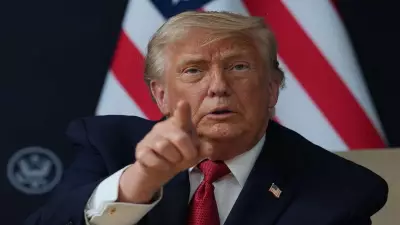
In a striking moment at the World Economic Forum in Davos, Switzerland, US President Donald Trump directly addressed critics who label him authoritarian, stating with characteristic defiance: "They usually say...I'm a dictator...but sometimes you need a dictator." The remarks, delivered during the CEO Reception and Dinner on Wednesday, January 21, quickly ignited social media and global political discourse.
Full Context of Trump's Controversial Remarks
President Trump elaborated on his unexpected embrace of the dictator label during his formal address. "We had a good speech. We got great reviews. I can't believe it," he began, before contrasting typical media coverage. "Usually they say, 'he's a horrible dictator type person.' I'm a dictator. But sometimes you need a dictator."
Trump immediately qualified this provocative statement by framing it as pragmatic governance. "But, they didn't say that in this case. And no, it's common sense. It's all based on common sense. It's not conservative or liberal or anything else. It's mostly, let's say, 95% common sense," he asserted in video clips that rapidly circulated online.

Social Media Erupts Over 'Classic Trump Energy'
The internet response was immediate and polarized. One X user captured what many described as 'classic Trump energy', noting: "Always spinning it as a win, calling himself a dictator but framing it as 'common sense leadership.' Only he could make that sound like a compliment."
Other commentators expressed deeper concerns about the normalization of authoritarian language. "Trump's owning the 'dictator' label they slap on him, but calling it common sense? Kinda dodges how that Venezuela raid and Greenland push look like power grabs to everyone outside the MAGA bubble," observed another user, referencing previous controversial actions.
Critics denounced the juxtaposition of 'dictator' with 'common sense' as particularly troubling. One remarked: "Common sense is lost to time in 2026." Another interpreted the statement as deliberate: "...not a gaffe. That's the mission statement." The discourse even included calls for presidential accountability, with one person stating: "Sometimes we need to impeach a president. Now would be appropriate."
Launch of Trump's 'Board of Peace' for Gaza Conflict
Beyond the rhetorical controversy, President Trump used the Davos platform to announce substantive foreign policy initiatives. On Thursday, he inaugurated his Board of Peace, aimed at maintaining the ceasefire in Israel's ongoing conflict with Hamas.
"This isn't the United States, this is for the world...I think we can spread it out to other things as we succeed in Gaza," Trump declared ambitiously. He suggested this new body could eventually rival established international institutions like the United Nations, despite notable absences from many traditional US allies.
Trump claimed significant international backing, asserting that 59 countries had joined the initiative, though only 19 were visibly represented at the launch. Addressing the assembled delegates from nations including Azerbaijan, Paraguay, and Hungary, he proclaimed: "You're the most powerful people in the world."
Addressing Greenland Acquisition and Global Concerns
The President also directly confronted international unease about his administration's geopolitical ambitions, specifically regarding Greenland. "People thought I would use force, but I don't have to use force," Trump stated, as reported by Reuters. "I don't want to use force. I won't use force."
These comments on Greenland dominated discussions throughout his whirlwind Davos visit. Emboldened after a year in office that saw significant institutions adapt to his approach, Trump did not hesitate to challenge European hosts on multiple fronts:

- Wind power and environmental policies
- Immigration frameworks
- Broader geopolitical strategies
The Davos appearance thus served as a multifaceted platform where Trump simultaneously defended his governing style, launched new international initiatives, and addressed global economic anxieties—all while generating the controversial soundbites that have become characteristic of his political brand.