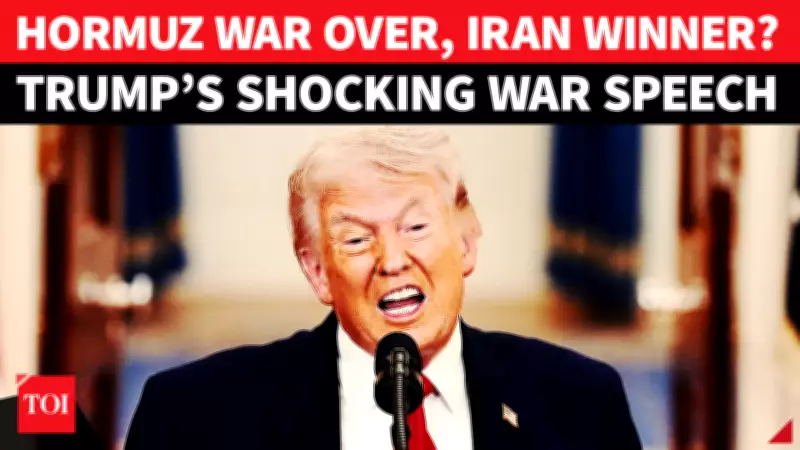
Trump's Surprising Admission on Iran's Power and Hormuz Strait Dependence
In a stunning series of remarks that have sent shockwaves through international diplomatic circles, former US President Donald Trump has made several surprising admissions regarding the ongoing Iran conflict, global energy markets, and America's strategic position in the Middle East.
Downplaying Hormuz Strait Concerns Amid Soaring Gas Prices
Addressing growing concerns about skyrocketing gas prices triggered by the escalating Iran conflict, Trump insisted that the United States possesses ample energy supplies to weather the storm. "The United States does not rely on the Strait of Hormuz for its energy needs," Trump declared, directly challenging conventional wisdom about global oil transportation routes.
He went further to urge other nations heavily dependent on Middle Eastern oil exports to take greater responsibility for securing this critical maritime passageway. "Countries that need that oil should be protecting that route themselves," Trump stated, suggesting a significant shift in America's traditional role as guarantor of global shipping lanes.

Iran as a 'Most Powerful Country' and Regime Change Denial
In perhaps his most surprising admission, Trump described Iran as one of the "most powerful countries" in the current geopolitical landscape. This characterization marks a dramatic departure from his previous administration's rhetoric and comes amid heightened military tensions across the region.
Trump also claimed that regime change in Iran was never an official goal of United States policy, despite years of maximum pressure campaigns and sanctions against Tehran. However, he suggested that Iran's leadership dynamics have fundamentally shifted following the elimination of key figures in recent conflicts, hinting at internal power realignments within the Islamic Republic.
Global Market Volatility and Regional Tensions
These remarks arrive during a period of extreme volatility in global financial markets, with oil prices experiencing wild fluctuations and energy security becoming a primary concern for nations worldwide. The ongoing conflict has created ripple effects across multiple sectors, from transportation to manufacturing, as countries grapple with supply chain disruptions.
Across the Middle East, tensions continue to escalate with multiple flashpoints emerging simultaneously. The strategic Strait of Hormuz remains a focal point of concern, with approximately 20% of the world's oil passing through this narrow waterway. Any disruption to shipping through this channel could have catastrophic consequences for the global economy.
Broader Implications for US Foreign Policy
Trump's comments suggest a potential recalibration of America's approach to Middle Eastern conflicts, with greater emphasis on regional partners assuming security responsibilities. This perspective aligns with his longstanding "America First" philosophy but raises questions about long-term stability in a region where power vacuums have historically led to increased conflict.
The former president's characterization of Iran as exceptionally powerful also represents a significant acknowledgment of Tehran's growing military capabilities and regional influence, despite years of economic sanctions and diplomatic isolation. This admission may influence future policy discussions regarding engagement with Iranian leadership.
As the situation continues to evolve, world leaders are closely monitoring developments, with particular attention to how Trump's remarks might influence both diplomatic negotiations and military calculations in one of the world's most volatile regions.