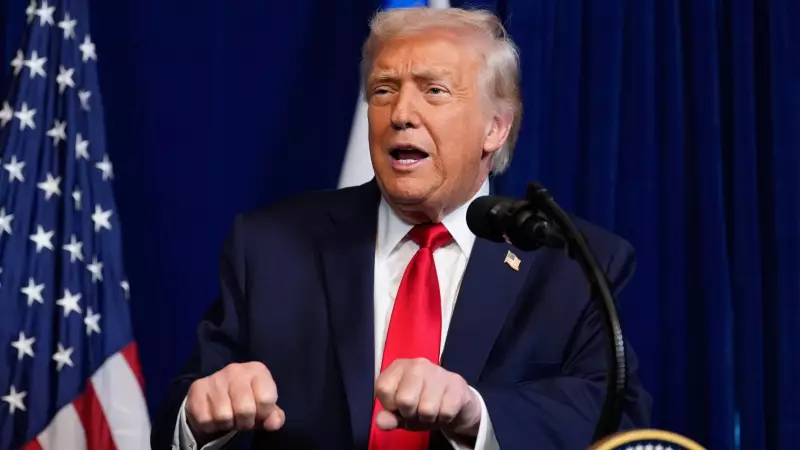
Former US President Donald Trump has once again positioned himself as a staunch advocate of aggressive trade policies, declaring that tariffs have been "incredible" for American national security and economic prosperity. In a recent interview, the presumptive Republican nominee for the 2024 presidential election outlined his vision for a more protectionist United States, setting the stage for potential global economic shifts.
Trump's Unwavering Defense of Tariff Strategy
Speaking in an interview that aired on Sunday, Trump vigorously defended his signature approach to international trade. He argued that imposing levies on foreign goods is not merely an economic tool but a critical instrument for safeguarding the nation. The former president claimed his past use of tariffs forced trading partners, particularly China, to the negotiating table and bolstered US manufacturing.
"We have to have a ring around the collar," Trump stated, using a metaphor to emphasize the need for economic boundaries. He expressed a desire for all countries, including allies, to contribute more financially, suggesting a transactional view of international relations where the US must always come out on top.

Pledging a More Aggressive Stance in a Potential Second Term
Looking ahead to a possible second term, Trump indicated he would not only continue but intensify this strategy. He proposed the concept of a "universal baseline tariff" on most imported goods, a move that would represent a significant escalation from his first term. Furthermore, he floated the idea of imposing tariffs exceeding 10% on all imports, a policy that economists warn could trigger inflation and retaliatory measures from other nations.
Trump specifically targeted China, suggesting he might levy a tariff of more than 60% on Chinese products. This stark warning underscores his continued focus on Beijing as America's primary economic competitor. His rationale hinges on the belief that such punitive measures are essential to correct trade imbalances and protect domestic industries from what he perceives as unfair competition.
The Broader Economic and Political Context
Trump's comments come at a time of heightened economic anxiety and geopolitical tension. His message resonates with a segment of the American electorate that feels left behind by globalization. By framing tariffs as a matter of national security, he connects trade policy directly to American sovereignty and strength.
However, critics argue that tariffs function as a tax on American consumers and businesses, raising prices and potentially slowing economic growth. They also point to the risks of trade wars, which can disrupt global supply chains and diplomatic relations. The debate over tariffs is set to be a central theme in the upcoming US presidential election, with President Joe Biden advocating for a more targeted approach focused on alliances and strategic sectors like semiconductors and clean energy.
Trump's unequivocal endorsement of tariffs signals a clear ideological divide. His promise of an even more aggressive trade policy suggests that if re-elected, the global economic landscape could experience profound and turbulent changes, with implications for international trade, diplomatic ties, and market stability worldwide.