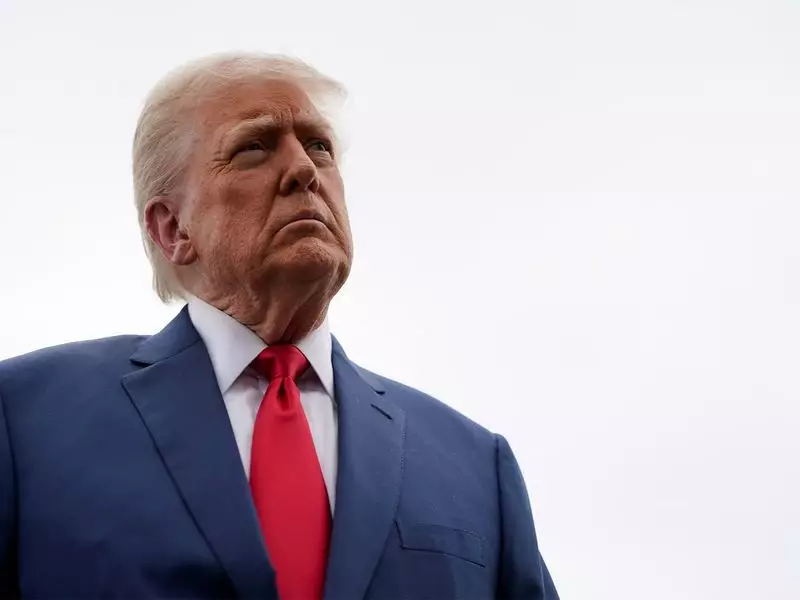
Former US President Donald Trump has launched a fresh verbal assault on the NATO military alliance. This criticism came swiftly after several key European leaders pushed back against his renewed interest in the idea of the United States purchasing Greenland. The incident, which unfolded recently, has once again brought to the fore the deep-seated tensions and Trump's persistent America-first stance within the transatlantic partnership.
European Pushback Triggers Trump's NATO Ire
The controversy reignited when Donald Trump reiterated his past fascination with the United States acquiring Greenland, the vast autonomous Arctic territory of Denmark. This notion was immediately met with resistance and dismissal from European capitals. Notably, Danish and other European officials reaffirmed that Greenland is not for sale and emphasized its strategic importance to the region.
This European pushback appears to have been the direct trigger for Trump's subsequent comments targeting NATO. In his characteristic style, he used the platform to lambast the alliance, accusing member nations of not contributing their fair share to collective defence budgets. Trump has a long history of criticising NATO allies for what he perceives as inadequate defence spending, often claiming the US bears a disproportionate burden.

Reaffirmation of US Primacy Amidst Alliance Strain
Beyond the specific issue of Greenland, Trump's statements served a broader purpose: to forcefully reaffirm the primacy of the United States within the NATO framework. He framed American leadership and military might as the indispensable core of the alliance, suggesting that European nations are overly reliant on Washington's protection without offering sufficient reciprocity.
This episode underscores the ongoing strain within NATO, an alliance that has faced internal challenges in recent years. The public disagreement highlights the fragile nature of transatlantic unity when confronted with unilateral propositions from a powerful member state. Analysts note that such rhetoric from a figure who may potentially return to the White House continues to create uncertainty about the future cohesion and strategic direction of the alliance.
Broader Implications for Transatlantic Relations
The fallout from this exchange extends beyond a simple war of words. It touches upon several critical issues in contemporary geopolitics. Firstly, it brings Arctic strategy into focus, with Greenland's location making it a region of growing strategic competition. Secondly, it questions the resilience of multilateral institutions like NATO when confronted with transactional and unilateral approaches from key leaders.
European leaders, while publicly committed to the alliance, are likely to view this as another sign of the volatile nature of the partnership under potential future Trump administration policies. The incident may accelerate European discussions on strategic autonomy and defence self-sufficiency, even as they publicly reaffirm their commitment to NATO.
Ultimately, the sequence of events—from the Greenland comment to the NATO criticism—serves as a potent reminder of how seemingly isolated issues can quickly escalate into major diplomatic spats, testing the foundations of long-standing international alliances. The focus now shifts to how both sides manage this friction and whether it leads to tangible policy shifts or remains confined to rhetorical posturing.