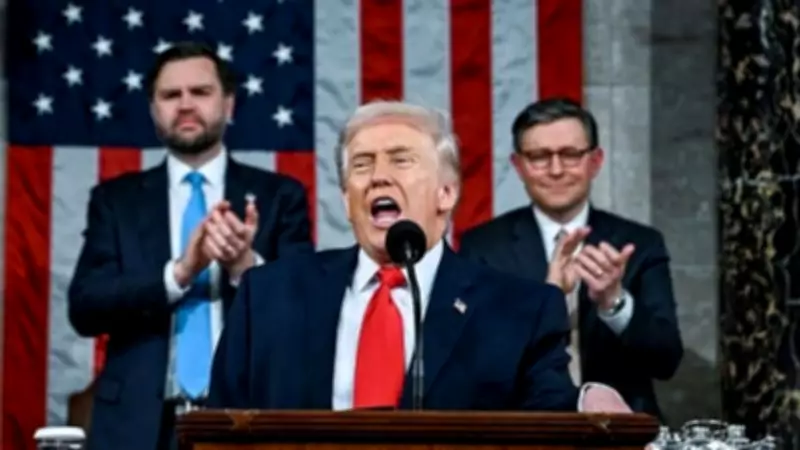
Supreme Court Justices Under Fire at Trump's State of the Union
In a dramatic turn of events, former President Donald Trump's State of the Union address has thrust the Supreme Court into the national spotlight. Following a recent ruling issued on Friday, Trump openly criticized the court and specifically targeted the six justices who ruled against him, highlighting a deepening rift between the executive and judicial branches of the U.S. government.
Trump's Vocal Denunciation of the Judiciary
During his highly anticipated speech, Trump did not hold back in expressing his disapproval of the Supreme Court's decision. He denounced the court as a whole and singled out the six justices who opposed his position, accusing them of judicial overreach and political bias. This public rebuke marks a significant escalation in Trump's ongoing conflicts with the judiciary, which have been a recurring theme throughout his political career.
The timing of this criticism is particularly noteworthy, as it came during the State of the Union, an event traditionally used to outline policy agendas and foster national unity. Instead, Trump used the platform to air grievances against the court, drawing immediate reactions from legal experts and political analysts who warn that such attacks could undermine public confidence in the judicial system.

Background of the Controversial Ruling
The ruling in question, issued just days before the State of the Union, centered on a key legal battle involving Trump's policies or actions. While specific details of the case were not elaborated in the original report, the decision clearly went against Trump's interests, prompting his vehement response. This incident adds to a series of high-profile clashes between Trump and the Supreme Court, reflecting broader tensions in American politics over the role and independence of the judiciary.
Legal scholars have expressed concern that such public denunciations by a former president could set a dangerous precedent, potentially influencing future court decisions or eroding the separation of powers. The six justices targeted by Trump have not publicly responded to his comments, maintaining the court's traditional stance of avoiding political commentary.
Implications for U.S. Politics and Governance
This event underscores the ongoing polarization in U.S. politics, where judicial rulings are increasingly viewed through a partisan lens. Trump's criticism at the State of the Union may galvanize his supporters while further alienating opponents, complicating efforts to achieve bipartisan cooperation on other issues.
- Increased scrutiny on Supreme Court justices: Their decisions and public perceptions are likely to face heightened attention.
- Potential impact on judicial independence: Concerns arise about political pressure affecting the court's autonomy.
- Broader discourse on legal norms: This incident fuels debates about the limits of executive criticism of the judiciary.
As the situation develops, observers are watching closely to see how this confrontation might influence upcoming legal cases or Trump's political strategy moving forward. The State of the Union address, intended as a moment of national reflection, has instead become a flashpoint in the enduring struggle between political power and judicial authority in the United States.