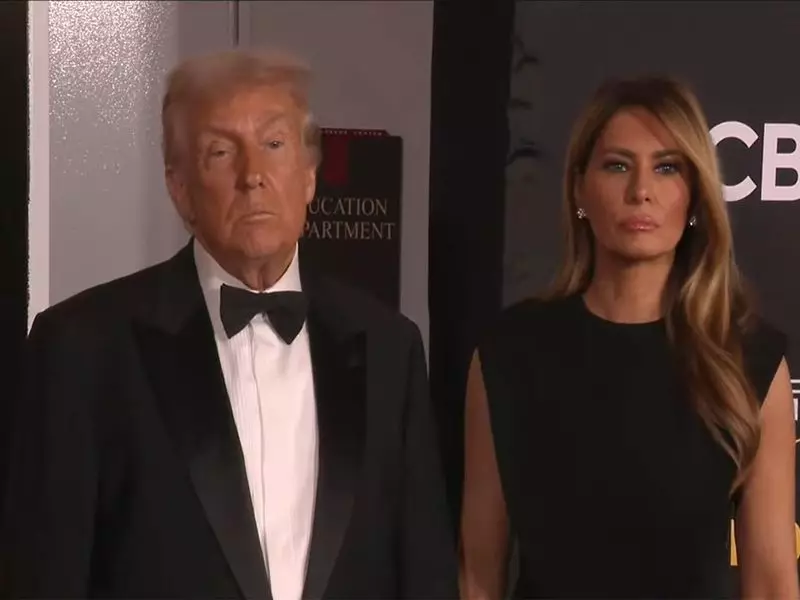
Former United States President Donald Trump has publicly voiced his frustration regarding the ongoing conflict in Ukraine, stating he is "a little bit disappointed" that Ukrainian President Volodymyr Zelenskyy has not yet read the peace proposal he claims to have formulated.
Trump's Critique and the Stalled Peace Process
In a recent interview with the media platform Just the News, Trump revealed his sentiments about the stalled diplomatic efforts. The Republican leader, who is currently campaigning for a return to the White House, indicated that he had shared a detailed plan to end the war with relevant officials. However, he expressed clear disappointment that the plan has seemingly not reached President Zelenskyy's desk for review.
"I have a plan that will end the war in one day," Trump asserted during the conversation, reiterating a claim he has made frequently on the campaign trail. He suggested that the proposal involves significant concessions from both Ukraine and Russia, though he has consistently refused to divulge the specifics publicly, arguing that doing so would compromise its effectiveness.

Zelenskyy's Firm Stance and Global Diplomacy
This development comes at a critical juncture as Ukraine prepares to host a major international peace summit in Switzerland next month. President Zelenskyy has been actively rallying global support for his own 10-point peace formula, which includes non-negotiable demands such as the complete withdrawal of Russian troops from all Ukrainian territory.
The Ukrainian leader's stance remains firm. He has repeatedly stated that any peace negotiations must be based on his country's sovereignty and territorial integrity. Zelenskyy and his administration have been skeptical of peace plans proposed by figures like Trump, which they fear might pressure Ukraine into making unacceptable territorial concessions to Russia.
Trump's comments highlight a fundamental clash in approaches to the conflict. While the former US president advocates for a swift, deal-driven conclusion potentially involving compromises, the Ukrainian government, backed by current Western allies, emphasizes a principle-based resolution that holds Russia accountable for its invasion.
Implications for Future US Policy and Alliances
The public airing of this frustration signals potential foreign policy directions should Trump win the November presidential election. His remarks underscore a likely shift from the Biden administration's policy of unwavering military and financial support for Ukraine for "as long as it takes."
Analysts suggest that a second Trump term could see the United States pushing Kyiv harder to enter negotiations with Moscow, possibly leveraging aid as a bargaining tool. This prospect has caused anxiety among European allies who view robust support for Ukraine as essential for continental security.
The situation places India in a delicate position as well. New Delhi has maintained a balanced diplomatic stance, calling for dialogue and a peaceful resolution while increasing its economic engagement with Russia. The evolution of US policy under a potential new administration will be closely monitored in Indian diplomatic circles, given its implications for global stability and India's own strategic partnerships.
As the world watches, the gap between Trump's proposed back-channel diplomacy and Zelenskyy's public, principles-first peace summit illustrates the deep complexities in ending Europe's largest land war in decades. The coming months, marked by both the Swiss summit and the US elections, will be pivotal in determining the conflict's trajectory.