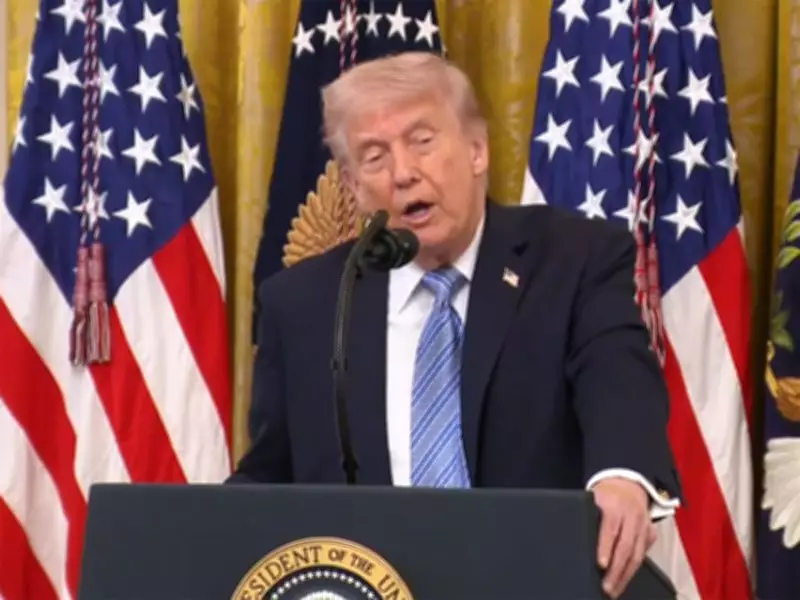
US President Donald Trump has dismissed recent polls suggesting that American support for a potential war with Iran is declining, labeling them as 'fake' and misleading. In a series of tweets, Trump argued that the polls are inaccurate and do not reflect the true sentiment of the American people.
Trump's Response to Polls
President Trump took to Twitter to express his skepticism about the polls, stating that they are 'rigged' and 'fake news.' He claimed that the American people fully support his administration's actions against Iran, particularly after the killing of top Iranian General Qasem Soleimani. Trump emphasized that his focus is on protecting US interests and ensuring national security.
Background on Iran-US Tensions
The tensions between the US and Iran escalated dramatically after the US drone strike that killed Soleimani. In response, Iran launched missile attacks on US bases in Iraq, leading to fears of a full-scale war. Despite these events, Trump has maintained that the US does not seek war with Iran but is prepared to respond to any aggression.

Criticism of Polling Methods
The president's dismissal of the polls is part of a broader pattern of criticizing media and polling organizations that produce negative results for his administration. Trump has previously attacked polls showing his approval ratings dropping, often questioning their methodology and sample sizes. His supporters echo this sentiment, arguing that traditional polls fail to capture the support of his base.
Analysis of Public Opinion
While Trump rejects the polls, some analysts point to a genuine shift in public opinion. A recent Reuters/Ipsos poll indicated that 53% of Americans disapprove of Trump's handling of Iran, while only 37% approve. Other surveys have shown similar trends, with a majority of Americans expressing concerns about the potential for a prolonged conflict. However, Trump's base remains largely supportive of his hardline stance against Iran.
Political commentators suggest that the president's dismissal of polls may be an attempt to shape public perception and maintain his narrative of strength. By labeling unfavorable polls as 'fake,' Trump seeks to undermine their credibility and reinforce his position among his supporters.
Implications for US Foreign Policy
The debate over public support for Iran policy comes at a critical time as the US continues to deploy additional troops to the Middle East. The administration has emphasized a strategy of maximum pressure on Iran, including economic sanctions and military deterrence. Critics argue that this approach risks escalating into a costly war, while supporters believe it is necessary to curb Iran's influence in the region.
International Reactions
Internationally, US allies have expressed concerns about the potential for conflict. European leaders have called for de-escalation and diplomacy, while Russia and China have criticized the US actions. The United Nations has urged restraint from all parties involved. Amid these tensions, Trump's dismissal of domestic polls may further complicate efforts to build a consensus on Iran policy.
In conclusion, President Trump's rejection of polls indicating declining support for a war with Iran is consistent with his previous criticisms of polling data. Whether this reflects a genuine belief or a strategic move remains to be seen. As the situation evolves, the gap between the administration's narrative and public opinion may have significant implications for US foreign policy and domestic politics.