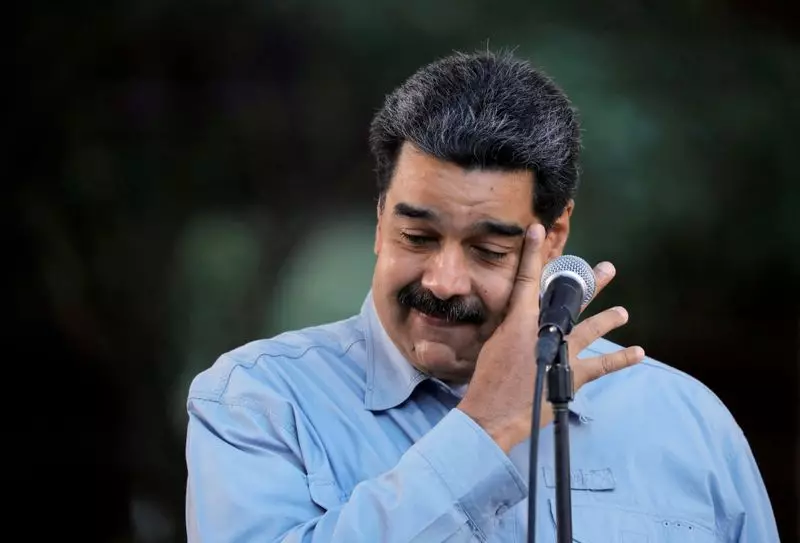
In a decisive move that reshaped the political landscape of Latin America, former United States President Donald Trump formally terminated the heavy-handed rule of Nicolas Maduro in Venezuela. The Trump administration officially recognised opposition leader Juan Guaido as the legitimate interim president of the South American nation.
The Announcement That Changed Venezuela's Political Course
The historic announcement was made on January 23, 2019, a date now etched in Venezuela's modern political history. This action by the US government represented the most significant international challenge to Maduro's authority since he assumed power following the death of Hugo Chavez. The decision was not taken in isolation; it came after Maduro's controversial re-election in May 2018, an event widely condemned by dozens of nations and international observers as neither free nor fair.
The Trump administration's stance was clear and unequivocal: it declared Maduro's presidency illegitimate. By recognising Juan Guaido, the President of the National Assembly, as the country's rightful interim leader, the US threw its considerable diplomatic and economic weight behind the opposition. This move was immediately followed by a cascade of similar recognitions from key American allies, including Canada, the United Kingdom, and several European and Latin American nations, creating a powerful coalition against the Maduro regime.

Economic Pressure and the Strategy of Maximum Pressure
Diplomatic recognition was just one pillar of the Trump strategy. The administration simultaneously unleashed a relentless campaign of economic sanctions designed to cripple the Maduro government's financial lifelines. The primary target was Venezuela's crucial oil industry, the source of nearly all of the country's foreign currency earnings.
The US Treasury Department imposed sanctions on the state-owned oil company PDVSA (Petroleos de Venezuela, S.A.), effectively freezing its assets within US jurisdiction and blocking American companies from doing business with it. This was a devastating blow to a nation already spiraling into hyperinflation and economic collapse. The sanctions aimed to sever the financial resources that propped up Maduro's government and its military support base. The Trump policy, often termed "maximum pressure," sought to force a political transition by making it economically unsustainable for the regime to continue.
Regional and Global Repercussions of the US Decision
The US intervention dramatically intensified the geopolitical struggle over Venezuela's future. While nations like Brazil, Colombia, and Chile aligned with Washington, other global powers pushed back. Russia, China, Iran, Turkey, and Cuba reaffirmed their support for Maduro, accusing the United States of violating international law and engaging in brazen interference in Venezuela's internal affairs.
This division created a stark geopolitical fault line. Russia and China, both major creditors to Venezuela, continued their political and economic backing of Maduro, seeing the nation as a strategic partner in the Western Hemisphere. The situation turned Venezuela into a proxy arena for larger global tensions, with diplomatic skirmishes playing out at the United Nations Security Council.
The ultimate goal of the Trump policy was a peaceful transition to democracy. The US, along with its partners, advocated for free and fair elections to be held under a new, legitimate government. They called for the immediate end of human rights abuses, the release of political prisoners, and the unimpeded entry of humanitarian aid to address the severe shortages of food and medicine plaguing the Venezuelan population.
Legacy and the Unfinished Transition
While the Trump administration's actions succeeded in internationally isolating the Maduro regime and applying unprecedented economic pressure, they did not achieve the immediate political transition that was hoped for. Nicolas Maduro, with the steadfast support of the Venezuelan military and his foreign allies, managed to retain control of the state apparatus.

Juan Guaido's interim government, despite its international recognition, struggled to exert authority inside Venezuela and gradually saw its momentum wane. The humanitarian crisis deepened, leading to a massive exodus of millions of Venezuelans fleeing the economic ruin. The policy set a powerful precedent for using diplomatic and economic tools to challenge authoritarian regimes, defining US-Venezuela relations for years to come and leaving a complex legacy for the subsequent Biden administration to navigate.
The events of January 2019 remain a pivotal chapter, demonstrating how a major world power can attempt to catalyze political change abroad, while also highlighting the limits of external pressure in the face of a entrenched domestic regime.