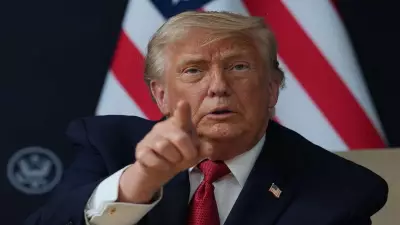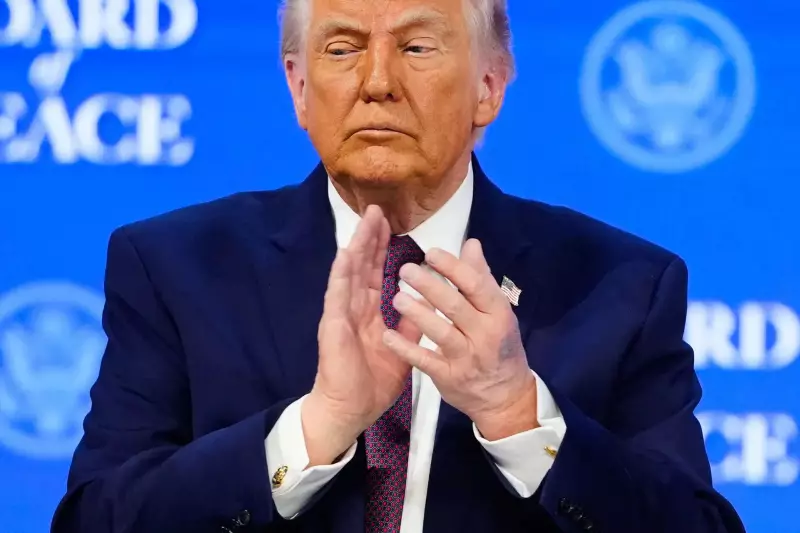
US President Donald Trump has moved to quell mounting speculation about his physical well-being, sparked by visible bruising on his left hand during a high-profile event in Davos, Switzerland. The president attributed the mark to a combination of accidentally hitting his hand on a table and his regular consumption of what he termed "big aspirin," which he claims leads to easier bruising as a side effect.
Trump's Personal Explanation of the Bruising Incident
In remarks to reporters, Trump provided a detailed account of how the bruise appeared, stating, "I’m very good. I clipped it on the table. So I put a little, what do they call it, cream on it. I clipped it." He elaborated on his aspirin regimen, noting, "I would say take aspirin if you like your heart, but don’t take aspirin if you don’t want to have a little bruising. I take the big aspirin. When you take the big aspirin, they tell you that you bruise." The president further revealed that his doctors had advised against the high dosage, saying, "The doctors said, 'You don’t have to take that, sir. You are very healthy.' I said, 'I’m not taking any chances.' That’s one of the side effects."
White House Confirms Accidental Cause and Provides Evidence
The bruising became a focal point during the "Board of Peace" signing ceremony in Davos, where images and videos showed the mark appearing about ten minutes into the event as Trump was seated signing documents. This prompted fresh scrutiny and criticism over the lack of transparency regarding the MAGA leader's health from the White House. In response, press secretary Karoline Leavitt issued a statement clarifying, "At the Board of Peace event today in Davos, President Trump hit his hand on the corner of the signing table, causing it to bruise." A White House official later added that the president is prone to bruising due to his daily aspirin intake and shared photographs taken before and after the event to demonstrate that no bruising was present earlier, stating, "Pictures from yesterday and this morning clearly show no bruising."

Trump's History with Aspirin and Medical Guidance
Trump has previously acknowledged taking a higher daily dose of aspirin than is commonly recommended. In an interview with The Wall Street Journal, he explained, "Aspirin is good for thinning out the blood. They say aspirin is good for thinning out the blood, and I don't want thick blood pouring through my heart. I want nice, thin blood pouring through my heart. Does that make sense?" His physician, Dr. Sean Barbabella, has confirmed that Trump takes 325 milligrams of aspirin each day. This dosage contrasts with medical guidance from institutions like the Mayo Clinic, which recommends an average daily dose of 75 to 100 milligrams for preventive purposes.
Past Instances of Bruising and Health Scrutiny
This is not the first time Trump has displayed bruising on his hands. In the past, he has been seen with marks on his right hand after returning to the White House and has occasionally attempted to conceal them with makeup or bandages, often keeping his hands away from cameras. Health questions have resurfaced periodically, including last year when Trump disclosed undergoing a sudden MRI scan. In December, the White House described the advanced imaging as a precautionary step, with Barbabella stating, "President Trump's cardiovascular imaging is perfectly normal," and adding that there were no signs of arterial narrowing, inflammation, or clotting. Notably, Trump has not released complete medical records related to a previous shooting incident where a bullet narrowly missed his ear during an attempted assassination.
Political Context and Broader Health Discussions
Health issues have frequently become a point of political contention, with Trump's MAGA base targeting his political rival, Joe Biden, whom they have claimed is unfit for office. Trump himself has repeatedly referred to Biden as "sleepy Joe" in press remarks, highlighting how physical well-being is often leveraged as a tool in political attacks. This latest episode underscores the ongoing public and media interest in the health of high-profile leaders, especially in an election year, where transparency and perception can significantly influence voter confidence and political narratives.