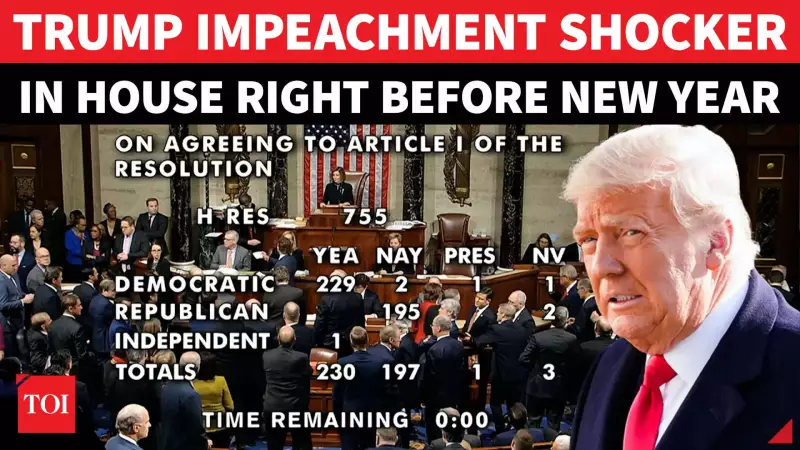
In a dramatic political showdown just before the New Year, the United States House of Representatives witnessed a significant, though unsuccessful, attempt to impeach former President Donald Trump. The move, spearheaded by a Democratic congressman, has highlighted the intense and ongoing divisions within American politics.
The Impeachment Resolution and Its Serious Allegations
Congressman Al Green, a Democrat from Texas, took to the House floor in a passionate speech earlier in December 2025. He labelled Trump a "profound threat to American democracy and the Constitution." Green's action centred on a privileged impeachment resolution, a procedural tool that forces a vote.
The resolution contained grave accusations against the former president. It charged Trump with abuse of power for allegedly threatening Democratic lawmakers with execution. This stemmed from a video where Trump was accused of urging military personnel to disobey illegal orders. Furthermore, the resolution accused him of intimidating federal judges, an act said to foster violence and undermine the independence of the judiciary.

The Vote: A Moral Stand Despite Defeat
The crucial vote occurred on December 30, 2025. Lawmakers voted on whether to table (or set aside) the impeachment resolution. The motion to table succeeded, effectively blocking the impeachment proceedings from moving forward. The final tally was 237 votes in favour of tabling against 140 votes opposed.
While this was a procedural defeat, Congressman Green framed the 140 votes against tabling as a major moral victory. These votes, primarily from Democrats, signalled substantial support for advancing the debate on Trump's impeachment. Green commended these lawmakers for taking a stand against what he called authoritarianism and vowed to continue efforts to hold Trump accountable.
Political Repercussions and the Road Ahead
This pre-New Year impeachment bombshell ensures that Trump's legal and political challenges remain at the forefront of the national conversation as the country heads into 2026. The stark 237-140 divide illustrates the deep partisan rift. For Republicans and the Democrats who joined them, tabling the resolution was likely seen as blocking a politically motivated action. For the 140 who supported it, it was a necessary constitutional check.
The event underscores the highly charged atmosphere in U.S. governance. Accusations of threatening co-equal branches of government and undermining democratic norms are now central themes in political discourse. Despite the resolution's failure, the strong showing by its supporters indicates that pressure on figures like Donald Trump will persist, setting the stage for continued political battles in the coming year.