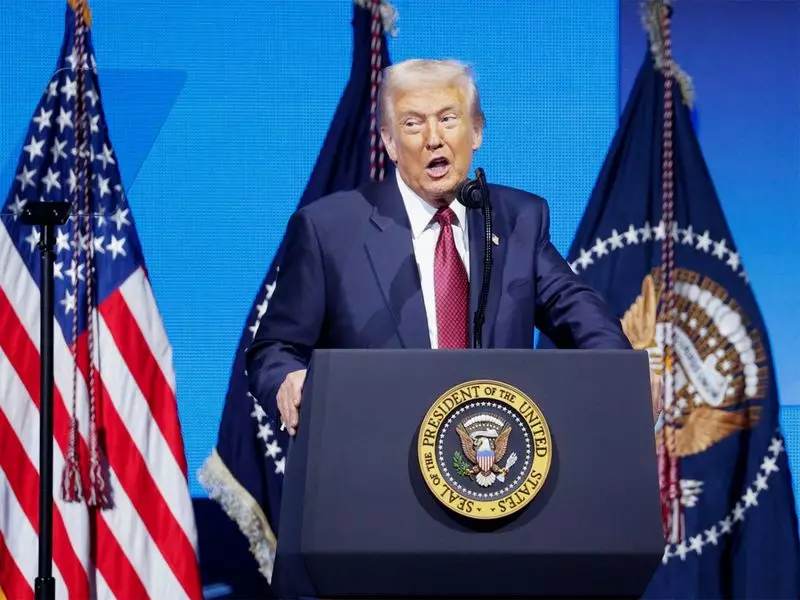
Former United States President Donald Trump has declared that Iran appears to have crossed a significant boundary with its recent direct assault on Israel. The statement, made during a campaign rally in Pennsylvania, marks a strong condemnation from the presumptive Republican presidential nominee and adds a new dimension to the international response to the escalating conflict.
Trump's Stark Warning at Pennsylvania Rally
Addressing supporters, Donald Trump delivered a pointed assessment of the weekend's hostilities. He stated that Iran had launched an unprecedented attack, which he characterized as them having "crossed the line." This rhetoric frames the incident not just as another skirmish but as a potential tipping point in regional tensions.
The attack in question involved a massive barrage of over 300 drones and missiles fired by Iran toward Israeli territory. This direct strike from Iranian soil marked a dramatic escalation from the long-running shadow war between the two nations, which has typically involved proxies. Trump's comments underscore the gravity with which this shift is viewed by key political figures in the United States.

The Context of the Attack and Global Response
The Iranian offensive was launched in retaliation for a suspected Israeli airstrike earlier in April on Iran's embassy compound in Damascus, Syria. That strike resulted in the deaths of two Iranian generals, prompting vows of revenge from Tehran.
In the wake of the attack, global powers have urged restraint. President Joe Biden reaffirmed America's "ironclad" commitment to Israel's security while also making it clear to Israeli Prime Minister Benjamin Netanyahu that the US would not participate in any counter-offensive against Iran. This delicate balance aims to prevent a full-scale regional war.
Other world leaders, including those from the United Kingdom, France, and Germany, have condemned Iran's actions. The United Nations Secretary-General also issued a stark warning, stating that the Middle East is on the "brink" of a major conflict and that neither the region nor the world can afford more war.
Political Repercussions and the Road Ahead
Trump's framing of the event as Iran crossing a "red line" carries significant political weight. It echoes language often used in international diplomacy to denote an unacceptable action that could trigger a severe response. His critique extended to the current Biden administration's foreign policy, which he suggested had projected weakness and emboldened Iran.
The situation remains highly volatile. Israeli war cabinet members have debated the timing and scale of a potential response. While the attack caused limited damage thanks to a coordinated defensive effort by Israel, the US, the UK, France, and Jordan, the symbolic breach of firing directly from Iranian territory is a game-changer.
The international community now watches anxiously to see if Israel will choose a path of de-escalation or respond militarily, a decision that could either calm the region or ignite a broader confrontation. The statements from influential figures like Donald Trump will undoubtedly shape the domestic American debate and influence the geopolitical calculus of all involved parties in the days to come.