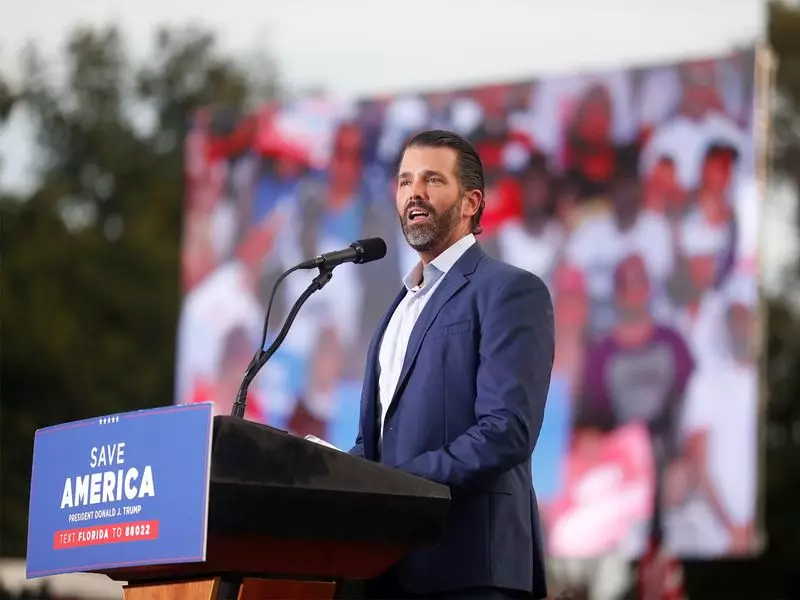
In a stark warning that could reshape the geopolitical landscape, Donald Trump Jr has publicly cautioned that his father, former President Donald Trump, might completely withdraw American support for Ukraine if he returns to the White House. The warning hinges on the stalled progress towards a peace deal to end the ongoing conflict with Russia.
The Core Warning: A Potential Abandonment of Kyiv
During a recent interview, the former president's son articulated a position that is causing concern in European capitals and Kyiv. He stated that while his father could potentially negotiate a peace deal "in 24 hours," the window for such diplomacy is not indefinite. The central threat is clear: if peace efforts remain deadlocked, a future Trump administration could halt the flow of American aid and diplomatic backing that Ukraine has relied upon since the Russian invasion began in February 2022.
The key phrase used by Donald Trump Jr was that "money trains" to Ukraine have not stopped. This characterization suggests a view within the Trump camp that substantial financial and military resources continue to flow to Kyiv without a clear endgame or successful resolution in sight. This perspective fuels the argument for a potential policy shift.

Context: The Stalled Peace and Political Pressure
This warning does not emerge in a vacuum. The war in Ukraine has dragged on for over two years, with a significant human cost and economic ripple effects worldwide. In the United States, a faction within the Republican Party, influenced by the former president's "America First" doctrine, has grown increasingly skeptical of prolonged, open-ended financial commitments to foreign conflicts.
Donald Trump Jr's comments directly tap into this sentiment. He positioned the potential withdrawal of support not as an abandonment of an ally, but as a logical consequence of failed diplomacy. The implication is that the current administration's strategy is not working, and a Trump presidency would pursue a radically different, more transactional approach to force a conclusion.
The timing is also crucial, coming amidst the heated 2024 presidential campaign. Foreign policy, particularly regarding Ukraine, has become a major point of contention between President Joe Biden and the likely Republican challenger, Donald Trump. These remarks serve to solidify a key policy difference for voters.
Implications and Global Repercussions
The potential consequences of such a policy shift are profound. A sudden cessation of US support could critically undermine Ukraine's defensive capabilities, altering the military balance on the ground. European nations, who have also provided significant aid, would face immense pressure to fill a potentially vast void, a challenge for which many are not fully prepared.
Furthermore, this stance sends a powerful signal to other global actors. Allies would question the reliability of US commitments, while adversaries might be emboldened. It represents a potential move towards a more isolationist US foreign policy, where support is conditional and directly tied to immediate, tangible results for American interests as defined by the administration.
For India, a nation navigating a complex relationship with both Russia and the West, such a shift would require careful diplomatic recalibration. New Delhi has maintained a stance of strategic autonomy, calling for dialogue and peace. A US withdrawal from active involvement in Ukraine could change the dynamics of international pressure on Russia, potentially creating new diplomatic challenges and opportunities.
In conclusion, Donald Trump Jr's warning is more than just campaign rhetoric; it is a direct insight into a possible future of US foreign policy. It underscores the high stakes of the 2024 election for international alliances and global security architecture. The message to Ukraine and its supporters is unambiguous: the current path may lead to a dramatic reduction in American backing unless a swift diplomatic solution is achieved.