Trump Nominates Kevin Warsh for Federal Reserve Chairmanship
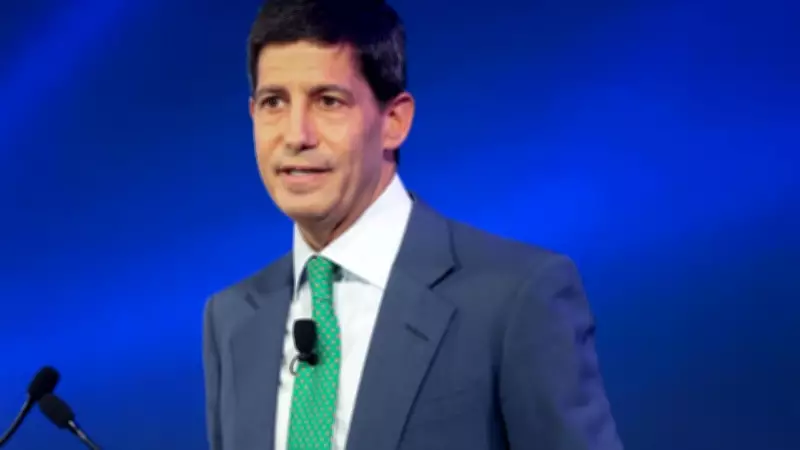
In a significant development that could reshape US monetary policy, former President Donald Trump announced on Friday his nomination of Kevin Warsh as Chairman of the Board of Governors of the Federal Reserve System. The announcement, made through a detailed post on Truth Social, sets the stage for what is expected to be a contentious confirmation process in the US Senate.
Warsh's Impressive Background and Qualifications
Kevin Warsh brings substantial experience to the position, having previously served as a member of the Federal Reserve's Board of Governors from 2006 to 2011. At the time of his initial appointment, he became the youngest Fed governor in history at just 35 years old. Trump highlighted Warsh's extensive credentials in his announcement, noting his current positions as the Shepard Family Distinguished Visiting Fellow in Economics at the Hoover Institution and Lecturer at the Stanford Graduate School of Business.
Warsh's educational background includes an A.B. from Stanford University and a J.D. from Harvard Law School. His professional journey encompasses significant roles in both government and finance. Prior to his first Fed appointment, he served as Special Assistant to the President for Economic Policy and Executive Secretary of the White House National Economic Council from 2002 to 2006 under President George W. Bush.

Financial Sector Experience and Policy Influence
Before entering government service, Warsh built his career in the financial sector as Vice President and Executive Director in the Mergers & Acquisitions Department at Morgan Stanley & Co. in New York. His influence extends beyond US borders, having authored an Independent Report to the Bank of England that proposed reforms in monetary policy conduct. The British Parliament subsequently adopted the report's recommendations.
During his previous tenure at the Federal Reserve, Warsh played crucial roles as:
- The Federal Reserve's Representative to the Group of Twenty (G-20)
- The Board's Emissary to Emerging and Advanced Economies in Asia
- Administrative Governor overseeing the Board's operations, personnel, and financial performance
Political Context and Confirmation Challenges
The nomination comes at a politically charged moment, following the Federal Reserve's recent decision to maintain steady interest rates under current chair Jerome Powell. Trump has been openly critical of Powell, recently calling him a "moron" and promising to announce his preferred candidate after the rate decision. These months of personal attacks have heightened investor concerns about potential political pressure on the central bank's independence.
Warsh emerged as the nominee ahead of other contenders including Fed Governor Christopher Waller, BlackRock executive Rick Rieder, and Trump's economic adviser Kevin Hassett. His nomination requires confirmation by the US Senate, where scrutiny is expected from both Democratic and Republican lawmakers.
Policy Alignment and Potential Challenges
During his initial Fed tenure, Warsh worked closely with then-chair Ben Bernanke during the 2008 financial crisis, serving as a key channel between policymakers and financial markets. He developed a reputation as an inflation hawk before resigning in 2011. In recent years, however, Warsh has aligned more closely with Trump's economic perspectives, criticizing the Fed for what he views as political overreach and arguing that its policies have restrained economic growth.
Warsh has supported interest rate cuts to stimulate economic expansion, even as current Fed officials have expressed concerns about inflation risks, including those potentially arising from Trump's tariff policies. This alignment with Trump's economic agenda may become a focal point during Senate confirmation hearings.
Senate Confirmation Process and Opposition
The confirmation process follows established protocol: the President nominates the Fed Chair from among sitting members of the Federal Reserve Board of Governors or other qualified candidates. The Senate Banking Committee then reviews the nominee through hearings before a full Senate vote requiring a simple majority for confirmation.

Already, potential obstacles have emerged. Senator Thom Tillis, a member of the Senate Banking Committee, has stated he will oppose any Fed nominee until an ongoing investigation involving current chair Jerome Powell is resolved. This declaration signals the contentious political environment surrounding the nomination.
The nomination of Kevin Warsh represents a pivotal moment for US monetary policy, with implications for financial markets, economic growth strategies, and the delicate balance between political influence and central bank independence. As the confirmation process unfolds, all eyes will be on how Warsh's extensive experience, evolving policy positions, and relationship with Trump shape his path to potentially leading the world's most influential central bank.